By
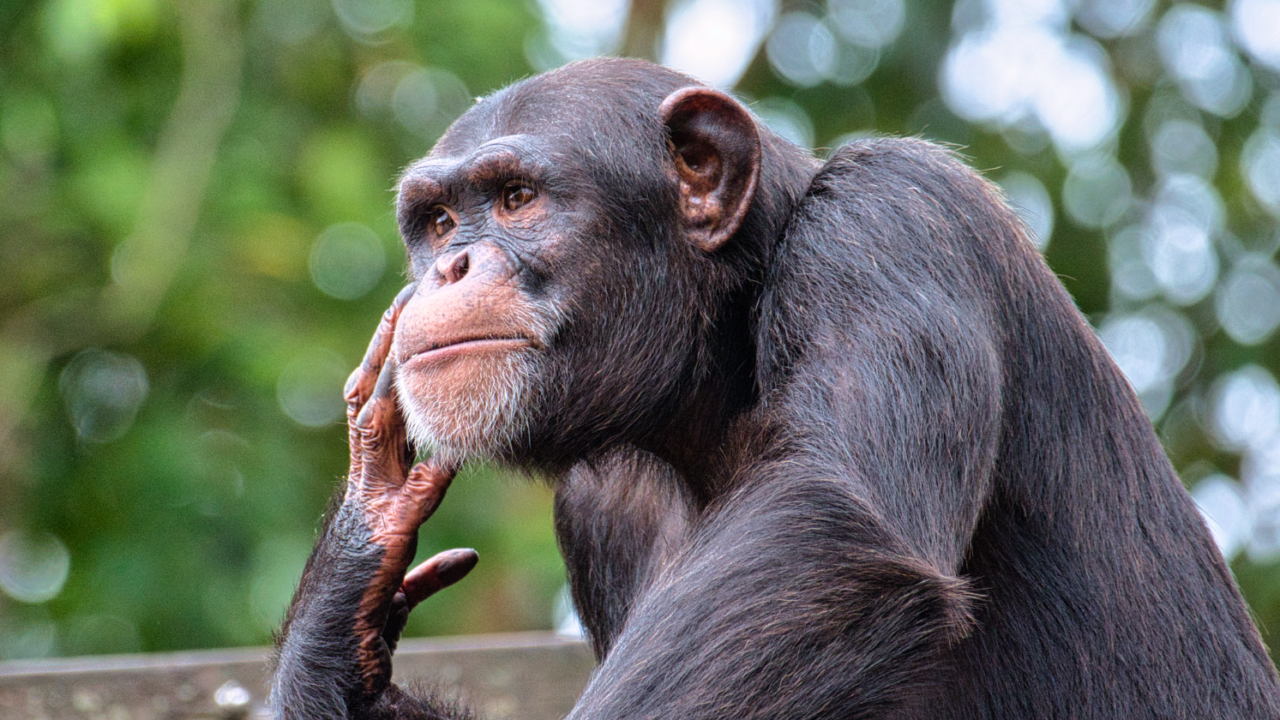
A banana hangs from the ceiling, too high to reach. A few wooden crates lie scattered on the floor. A chimpanzee looks up at the fruit, then at the crates, then back again.
Then it starts stacking.
That scene, from the research station on Tenerife where the German psychologist Wolfgang Köhler studied chimpanzees during the First World War, became one of the most famous experiments in the history of psychology. More than a century later, a team in Finland has watched something very similar happen with a creature whose brain is smaller than a grain of rice.
The puzzle that defined "insight"
Köhler's experiments were simple. He placed food out of reach and left objects nearby, such as boxes, crates and sticks. Then he watched.
Rather than slowly stumbling on the answer through trial and error, his chimpanzees often seemed to pause and then suddenly put the pieces together. To Köhler, it looked like a moment of insight: seeing that an ordinary object could be used in a new way to solve a problem. No one had trained the chimps to stack boxes. They worked it out.
Since then, researchers have run versions of the "box and banana" test with other animals, including birds and elephants, and both have passed. It became a benchmark for clever, flexible thinking, usually in animals with large brains.
A bumblebee version
Olli Loukola, a behavioural ecologist now at the University of Turku, had spent about a decade studying bumblebees. He wondered whether they could solve the same kind of problem.
There was an obvious obstacle: bees can fly. So his team designed a small arena that was, as he put it, just a little too high for a bee to stand and reach the ceiling, but too small to fly in.
The bees first learned two separate things. A blue artificial flower meant a sugary reward, and a small styrofoam ball was a harmless object that could be moved. Crucially, they were never taught to put the two together.
Then the researchers placed the blue flower on the ceiling, out of reach, and put the ball somewhere else in the arena.
What the bees did
Bee after bee grabbed the ball and started pushing it around. Loukola noted that bumblebees love rolling balls. Some took longer than others, and some made plenty of mistakes along the way.
But in the end, almost three-quarters of them rolled the ball beneath the flower, climbed on top and reached the reward. Loukola admitted he hadn't expected such a high success rate.
In a further test, the researchers hid the flower behind one of two screens before introducing the ball. The bees pushed the ball towards the side where the flower actually was, which suggests they weren't just shoving it around at random.
The results were published in Science in 2026 by researchers from the universities of Oulu, Helsinki and Turku. The senior author described it as essentially an insect version of the classic box-and-banana problem.
How can such a tiny brain do this?
A bumblebee's brain is roughly a cubic millimetre in size and contains around a million neurons. A chimpanzee's brain has billions. For a long time, scientists assumed that kind of problem-solving needed a big brain with plenty of spare capacity.
Findings like this suggest otherwise. Bees live complicated lives. They have to find flowers that change from day to day, remember routes and deal with constant novelty. As Loukola pointed out, the flowers they visit today may not be blooming tomorrow. A brain that can adapt on the fly is extremely useful.
It may be that what matters for clever behaviour isn't just brain size. It may be how efficiently a brain's circuits are organised, and how much the animal's way of life demands flexibility.
What it doesn't prove
It's tempting to say the bees "understood" the problem the way a chimpanzee or a person might. That's a big step, and the researchers are careful about it.
The bees clearly solved a new problem without being taught the answer, and they did it far more often than chance would predict. What's happening inside their heads is still an open question. They might be reasoning about the ball and the flower. They might also be combining simpler learned rules in a way that happens to look like insight.
Köhler faced the same debate in 1917. Critics argued his chimps were just doing trial and error quickly. A century on, scientists are still arguing about what counts as genuine insight. The bees have just made the debate a lot more interesting.
Smaller than we thought
Each new study like this chips away at the idea that complex thinking belongs only to big-brained animals. Crows, octopuses, fish and now bumblebees have all done things scientists once assumed they couldn't.
Loukola says he doesn't know where the limits of a bumblebee's mind are. He just knows he hasn't reached them yet.