By
The most famous experiment in the history of reward began with a mistake.
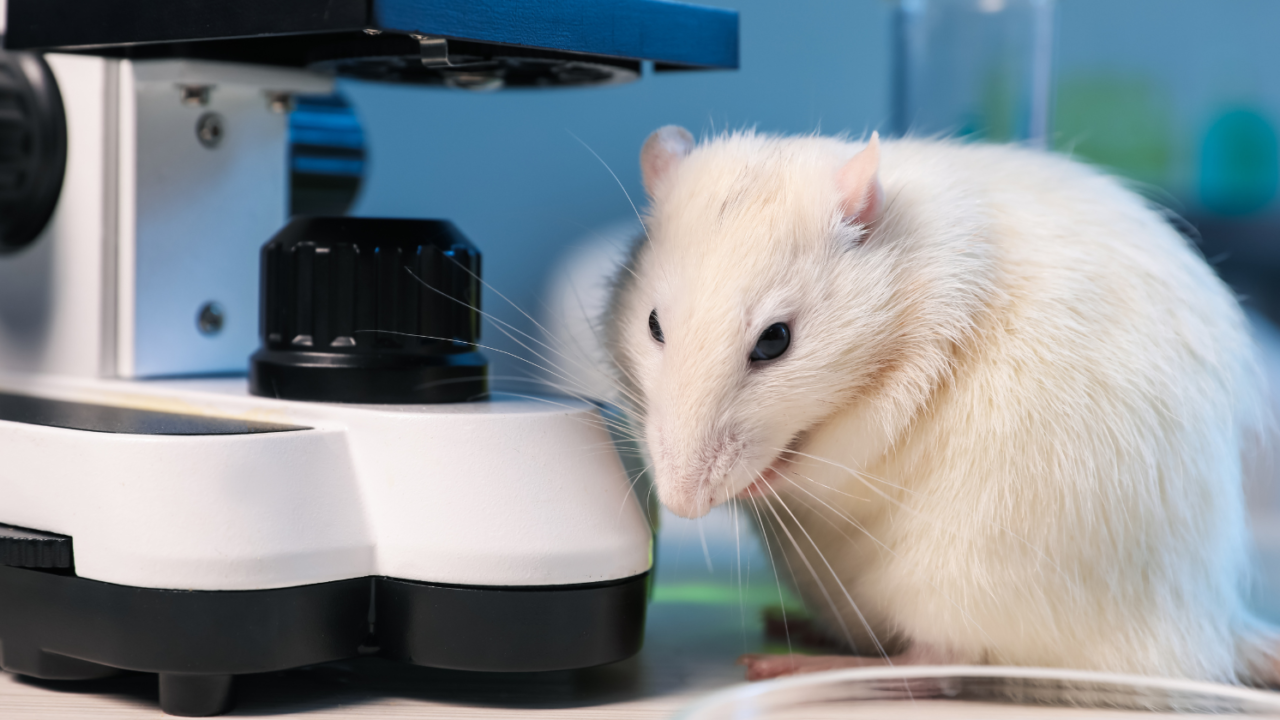
In 1953, James Olds was a young psychologist at McGill University in Montreal. He wasn't trying to find pleasure in the brain at all. He was aiming for a region involved in alertness, hoping to see whether stimulating it helped rats learn.
His electrode missed.
A rat that kept coming back
At McGill, Olds worked with a graduate student called Peter Milner. Their technique was simple for its time. They implanted a thin wire electrode into a rat's brain, then delivered a tiny pulse of electricity whenever the rat wandered into one corner of a box.
Earlier tests in the alertness region had been discouraging. If anything, rats avoided the spot where they'd been stimulated.
This rat did the opposite. It kept returning to the same corner, again and again, as if looking for something. When the researchers later X-rayed its head, they found the electrode had landed somewhere unexpected: a deep region called the septal area.
Handing over the controls
Olds and Milner then did something that would make their names. They gave the rats a lever and wired it so the animals could stimulate their own brains.
The rats learned almost immediately. Some pressed the lever over and over for hours on end, far more often than they would for food or water. Olds and Milner published the results in a 1954 paper that is still taught in psychology courses today.
In later experiments, Olds found brain sites that drove even more extreme behaviour. Some rats pressed thousands of times an hour. One rat kept up more than 2,000 presses an hour for 26 hours straight. Rats would run across electrified grids that gave painful shocks to their feet, just to reach the lever on the other side.
Choosing the lever over dinner
The most unsettling results came a decade later.
In a 1965 study, psychologists Aryeh Routtenberg and Janet Lindy gave hungry rats a choice during their one daily hour of access to food. They could press a lever for food or a lever for brain stimulation.
Rats with electrodes in some regions managed to balance the two. But several rats with electrodes in a bundle of fibres called the medial forebrain bundle mostly ignored the food. They spent the session stimulating their brains and steadily starved themselves.
That's the image that made the work famous: an animal so captured by a pulse of electricity that it neglected its own survival.
The "pleasure centre" that wasn't quite
Newspapers loved it. The idea of a "pleasure centre" in the brain spread quickly, and the rats were often described as being in a state of bliss.
Neuroscientists now tell a more careful story. The stimulation was activating parts of what we call the brain's reward system. That's a network that includes the ventral tegmental area, which sends the chemical messenger dopamine forward to regions such as the nucleus accumbens.
The medial forebrain bundle, where the rats starved themselves, is a major highway running through this network and through the hypothalamus, which also helps regulate hunger.
Many researchers now think this system is less about pleasure itself and more about wanting. It drives motivation, craving and the urge to go after something again. That would explain why the rats behaved less like contented diners and more like gamblers who couldn't walk away from the machine.
Why a 70-year-old rat still matters
Olds and Milner's discovery gave scientists a way to study motivation directly in the brain. Before them, reward was mostly a theory. Afterwards, it had an address.
Their work paved the way for decades of research on addiction. Many addictive drugs act on the same circuits the rats were stimulating, which is part of why drug cravings can feel so overwhelming and so hard to reason with.
It also changed how we think about everyday habits. Checking your phone, refreshing a feed or going back for one more snack rarely feels like bliss. It often feels more like a pull. That pull, at least in part, comes from the same system that one misplaced electrode in Montreal first revealed.
Olds himself spent the rest of his career mapping these circuits. He died in a swimming accident in 1976, aged 54. Milner, who went on to a long career at McGill, lived to 99.