By
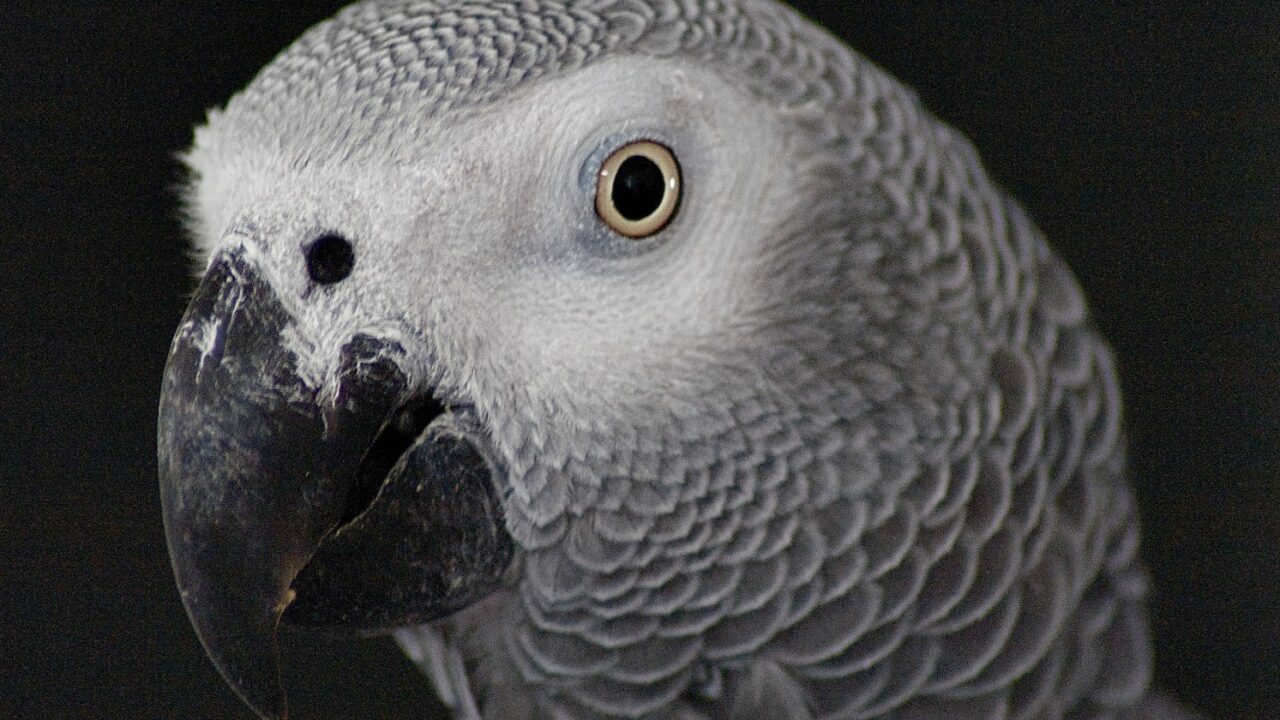
He was bought in a pet shop and taught in a university basement. His results landed just as neuroscientists were discovering that the bird brain had been misnamed.
In 1977, Irene Pepperberg walked into a Chicago-area pet shop and asked the owner to pick her a parrot. She held a Harvard doctorate in theoretical chemistry and no degree in animal behavior. She also held an idea most of her field considered a waste of time: that a bird could be taught to answer questions, not just repeat sounds. Her grant proposals, she has said, came back asking, "What are you smoking?" (New Yorker).
The year-old African grey who went home with her became one of the most famous animals in comparative psychology. She named him Alex, short for Avian Learning EXperiment (Alex Foundation).
His most important result was not that he could name things. It was that he could answer questions about the things he named. How a bird could do that, with a brain the size of a shelled walnut and no layered cortex, was a puzzle neuroscientists were already beginning to solve.
Learning by watching
Pepperberg taught Alex with what she called the model/rival method (review). One trainer held up an object and asked a second trainer what it was. A correct answer earned praise and the object. A wrong one meant the object was taken away. Alex, watching from the side, learned that each word pointed to a specific thing and that saying it correctly got you that thing.
The second trainer doubled as his rival, competing with him for the prize. Then the trainers swapped roles, so the game was never tied to one person.
By the end of his life, according to Pepperberg's reports, Alex could label about 50 objects, seven colors and five shapes, and name quantities up to six (Brandeis).
Three experiments that made him famous
Naming things was only the start. In 1987, Pepperberg showed Alex two objects and asked, "What's same?" or "What's different?" The right answer was not an object. It was a category: "color," "shape" or "matter." If both objects were green but one was wood and the other plastic, the answer to "What's different?" was "matter." Alex scored roughly 70 to 77 percent on pairs of familiar objects and 82 to 85 percent on pairs with combinations of colors, shapes and materials he had never seen. Chance was one in three.
A year later, she tested what happened at the extremes. Alex learned to answer "none" when two objects had nothing in common (asked what was same) or were identical (asked what was different).
Then came 2005. Shown a tray of colored objects in different quantities and asked, for example, "What color 5?" when no set of five was present, Alex answered "none." He got five of six such trials right. Nobody had taught him that the word could mean the absence of a quantity.
The same/different result matters most for neuroscience. To answer, Alex had to hold two objects in mind, compare them on several dimensions at once, and report the dimension rather than the object. Monkeys performing comparable abstract-rule tasks lean heavily on the prefrontal cortex. Birds have no layered cortex, let alone a prefrontal one.
Was he just reading his trainers?
Any claim about a clever animal has to get past Clever Hans. In the early 1900s, a German horse appeared to do arithmetic, tapping out answers with a hoof. The psychologist Oskar Pfungst later showed that Hans was watching his questioners. Without knowing it, they gave off tiny signals, tensing as the horse tapped and relaxing when he reached the right number.
So the obvious question about Alex was the same. Was he answering, or reading the room?
Pepperberg built controls against that risk. In the 2005 number tests, a second person who had not seen the tray confirmed what Alex said. Five different people ran sessions, so no single individual could signal that a test was under way. The tray sat close to Alex's eye and far from the questioner's face, so following the questioner's gaze would not have given him the answer. In the same/different work, she used combinations of objects Alex had never seen together, which ruled out memorized answers. These controls make simple cueing an unlikely explanation.
What one bird can and can't prove
The results are strong, and they have limits. Most come from a single bird in a single lab, and no independent replication of the same/different or "none" results turned up in the literature search for this piece. Alex was also not flawless. His scores usually fell between about 70 and 90 percent, well above chance but short of perfect. Some critics argue that his answers reflect sophisticated conditioning rather than concepts.
What the evidence supports is narrower than the legend. His labeling and his grasp of same and different are well documented. His "none" is zero-like, not full arithmetic. The published work does not show that he understood grammar, and it never tested consciousness. A fair claim is that he passed tests once used to argue for abstract thinking in humans and some primates. "Alex proved birds think like us" is not.
The "bird-brain" naming mistake
A large parrot's brain is about the size of a shelled walnut. A macaque's is several times heavier. For a long time, that gap, plus the bird brain's odd look, seemed to settle the question. Three discoveries unsettled it.
The first was about names. Between 1885 and 1908, the anatomist Ludwig Edinger built an influential model in which brains evolved up a ladder from fish to humans (Jarvis et al., 2005). He and, later, Cornelius Ariëns Kappers labeled most of the bird forebrain as striatum. In mammals, the striatum belongs to the basal ganglia, deep structures that handle habits and movement, not reasoning. Terms like neostriatum, hyperstriatum and archistriatum stuck for about a century, and each implied that the bird's thinking brain was really a habit machine.
Studies of gene activity, connections and development showed the old reading was wrong. In vertebrate embryos, the forebrain starts with two main zones. The lower zone forms the striatum. The upper zone, the pallium, gives rise to the cerebral cortex in mammals. Most of the bird forebrain grows from the pallium.
It is not the bird version of our habit system. In 2004 and 2005, an international consortium of neuroscientists published a new naming scheme to reflect that, estimating that about 75 percent of the avian telencephalon is pallium. How closely individual bird regions match specific cortical areas is still debated. "Bird-brained," in other words, was partly a labeling error.
Small brain, lots of neurons
The second discovery was about numbers. In 2016, researchers counted neurons in 28 bird species, from zebra finches to emus. Songbird and parrot brains held about twice as many neurons as primate brains of the same mass. Large parrots and corvids had as many forebrain neurons as monkeys with much larger brains, or more.
The reason is packing. Bird forebrain neurons sit at very high density, so a small brain can hold a primate-scale number of them. Brain size alone was a poor guide to computing power.
Different layout, similar wiring
The third discovery was about structure. The mammalian cortex has six layers, with columns of connected neurons running through them, a "canonical circuit" often treated as the hardware of higher thinking. The bird pallium has no visible layers. Its neurons sit in clusters called nuclei.
In 2020, a team including Martin Stacho and Onur Güntürkün mapped fiber pathways in the brains of pigeons and barn owls using 3D imaging and tracing. Beneath the clustered layout, they found layer-like and column-like connections strikingly similar to the cortex's canonical circuit, at least in sensory areas.
Birds also have a region called the nidopallium caudolaterale, or NCL, widely considered a functional analog of the prefrontal cortex even though it looks nothing like it. It is linked to working memory, rule following and decision making.
A shared ancestor, 320 million years ago
Birds and mammals last shared an ancestor about 320 million years ago, a reptile-like animal that predates the dinosaurs. Both lineages inherited a pallium from it. Mammals stacked theirs into layers. Birds packed theirs into clusters.
Whether the cortex-like circuits found in birds were inherited from that ancestor or evolved separately is still debated. Either answer is remarkable. If inherited, the basic wiring for flexible thinking is older than mammals, and layers are just one way of arranging it. If separate, evolution reached a similar solution twice from different starting points.
Either way, Alex stops looking like a fluke. A bird with primate-scale neuron numbers, cortex-like wiring and a prefrontal-like control region is a less surprising candidate for abstract comparison.
There is even early evidence for something more. In 2020, Andreas Nieder's lab recorded from the NCL of two crows as they reported whether they had seen a faint stimulus. Some neurons tracked what the crow reported seeing rather than what was actually shown. In primates, that pattern is treated as a marker of conscious perception. It is one study, in crows rather than parrots, but it suggests the question can now be tested instead of only argued.
The "stochastic parrot" question
In 2021, the linguist Emily Bender and colleagues used the phrase "stochastic parrots" for large language models, the AI systems behind chatbots. Their point was that a system can produce fluent language by stitching together statistical patterns, with no grounding in what the words refer to. The metaphor leans on the old view of parrots: sound without sense.
Alex fits it awkwardly. His words were tied to objects he could see, handle and request, and he was tested on combinations he had not been trained on.
That does not mean Alex "really understood" while AI only imitates. Neither half of that claim has been proven. What Alex offers the debate is a method, not a verdict. Pepperberg's case rested on new test items, controls against cueing, and asking what kind of answer a task actually requires. Similar logic runs through current efforts to test AI systems. The lesson from the parrot is to judge any mind by how it handles what it has not seen before.
Alex's last words
Alex died on September 6, 2007, at 31. The New York Times reported that as Pepperberg put him in his cage the night before, he said: "You be good, see you tomorrow. I love you." Other accounts of the exchange differ, so the exact words are less settled than the legend suggests. Whether he meant them as a person would is the kind of question his own experiments taught researchers to ask carefully.
Tool use, language, self-awareness, abstract reasoning: each has at some point been offered as the thing that sets humans apart, and each has been challenged by work on other animals. Dismissing the bird as "bird-brained" was partly a failure of anatomy, with the wrong names on the wrong parts, and partly a failure of testing. Alex did not prove that birds think like us. He showed that the old tests and the old names had sold birds short.
That raises an uncomfortable question: what other forms of intelligence are we failing to recognize today, simply because we don't know how to ask the right questions?