By
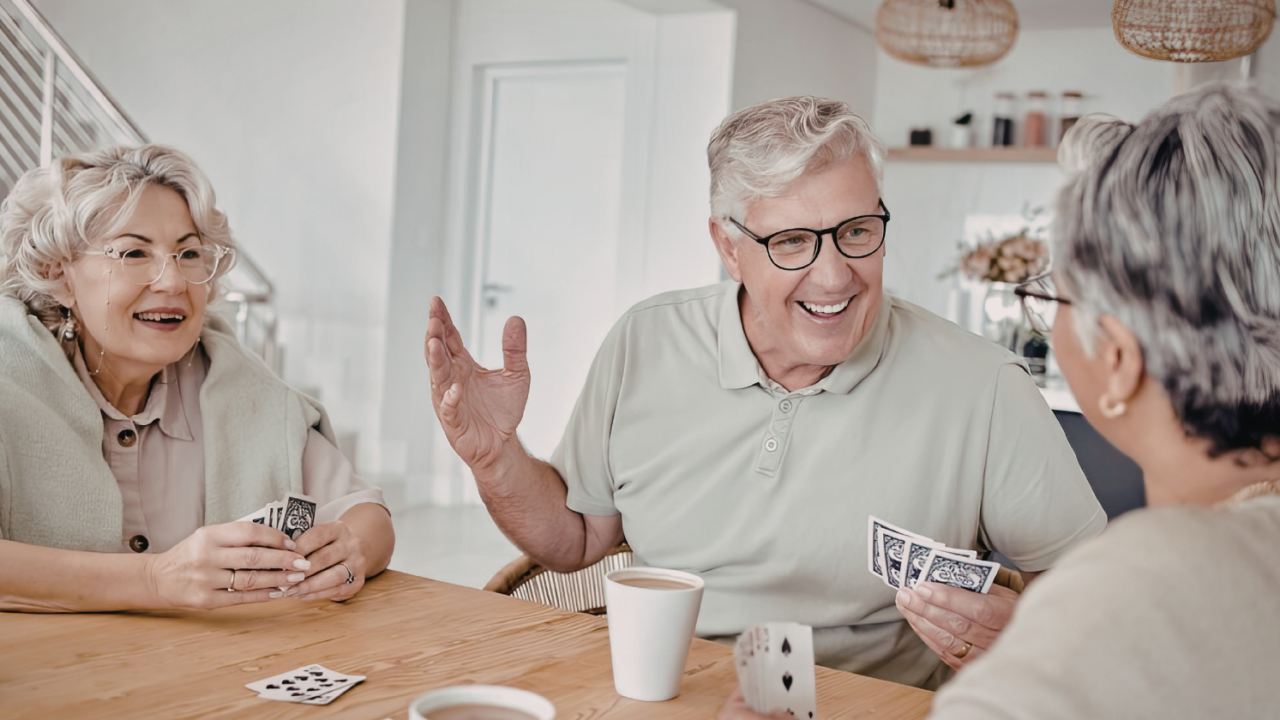
Picture two people in their mid-80s. One sits down every morning with coffee and the crossword, determined to keep their mind in shape. The other spends the morning on the phone with an old friend, then meets a neighbor for lunch.
Most people would bet on the crossword fan to stay sharper. A long-running study of unusually sharp older adults suggests the friend on the phone might deserve a closer look.
Meet the SuperAgers
Since the late 2000s, researchers at Northwestern University’s SuperAging Program have studied a rare group of people. They’re over 80, but their memory performs at least as well as that of people 20 to 30 years younger. The researchers call them SuperAgers.
The program has focused on a specific kind of memory called episodic memory, the ability to recall particular events, like what you did last Tuesday or what someone told you at dinner. It’s the type of memory that usually declines with age, and drops sharply in Alzheimer’s disease.
What set them apart
In a 2017 study published in PLOS ONE, the Northwestern team, led by Amanda Cook Maher and Emily Rogalski, compared 31 SuperAgers with 19 people of the same age whose memory was average for their years. The groups were similar in education, background and intelligence.
Everyone completed a questionnaire on psychological well-being, covering six areas: independence, sense of mastery, personal growth, purpose in life, self-acceptance and positive relationships with others. On five of the six, the two groups scored about the same.
The difference was relationships. SuperAgers reported more warm, trusting, high-quality relationships with other people than their average-memory peers. As Rogalski put it, you don’t have to be the life of the party, but the findings support the idea that strong social networks are linked to slower cognitive decline.
Inside a SuperAger’s brain
Earlier work from the same program found that SuperAgers’ brains look different, too. Their outer layer of cortex tends to be thicker than that of their average peers, and it seems to thin more slowly over time.
One area stands out: the anterior cingulate cortex. In SuperAgers, this region has been found to be unusually well preserved, sometimes even thicker than in much younger adults. The anterior cingulate is involved in attention, motivation and emotion, and it’s closely tied to how we process social information. Researchers have also reported that SuperAgers have more of a rare type of brain cell, called von Economo neurons, in this region. These cells are thought to play a role in social awareness.
It’s tempting to connect the dots between a well-preserved social brain and a rich social life. The research doesn’t prove that friendships build these brain differences, or the other way around. But the overlap is intriguing.
Why friendship might protect the brain
There are several plausible reasons social connection might help an aging brain. Conversation is surprisingly demanding mental work. Following a story, remembering who said what, reading emotions and responding in real time all exercise memory, attention and language at once, and do so in ways that change every time.
Social ties may also buffer stress. Loneliness and isolation are linked to a heightened stress response, driven by the body’s HPA axis. Long-term exposure to stress hormones can affect the hippocampus, a region vital for forming new memories. Friends can also nudge people toward healthier habits, from getting out of the house to seeing a doctor when something seems wrong.
So what about crosswords?
Crosswords and other puzzles aren’t bad for you. But the evidence that they protect against decline is weaker than many people assume. A 2018 study of older adults in Scotland, published in the BMJ, found that people who regularly did puzzles and other problem-solving activities tended to have higher mental ability overall. They didn’t decline any more slowly as they aged, though.
In other words, puzzle lovers may start from a higher baseline, but puzzles alone don’t seem to slow the slide. The SuperAger research didn’t directly compare crosswords with friendships, so it can’t say one beats the other. What it does suggest is that the social side of life deserves a lot more attention than it usually gets.
Keeping the phone lines open
The SuperAger studies are small, and they show associations rather than proof. As the researchers stress, a strong social network doesn’t guarantee protection from Alzheimer’s or memory loss. Genetics, education, health and luck all play a role.
But friendship is one of the few factors people can actually do something about. Calling an old friend, joining a group, volunteering or simply saying yes to an invitation may do more for an aging brain than another morning alone with a puzzle. Ideally, you’d do both: the crossword over coffee, then a call to someone who’ll argue with you about the answers.