By
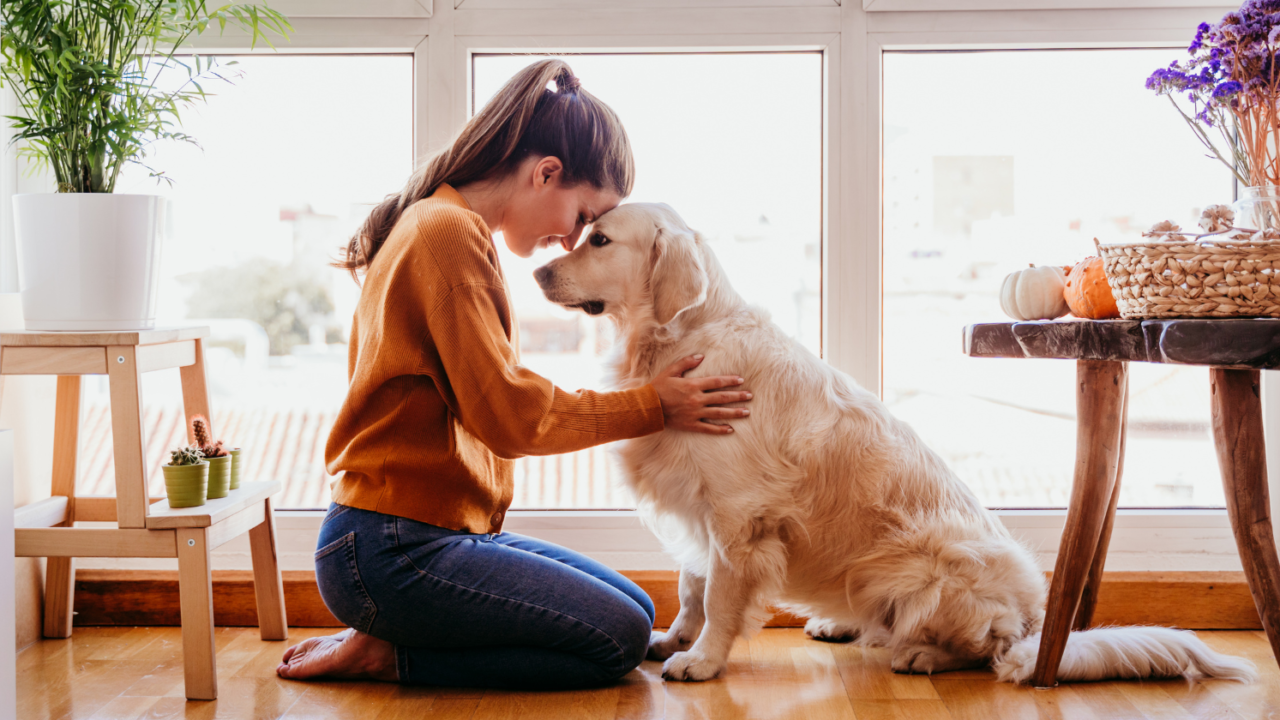
You come home after a long day, and before you’ve even put your keys down, your dog is there, tail going, looking right into your face. For a moment, everything else drops away. Plenty of people quietly admit they find that moment easier and more comforting than most of their conversations with other humans.
That can feel a little embarrassing to say out loud. But neuroscience suggests there’s nothing strange about it. The bond between people and their dogs taps into some of the brain’s oldest and most powerful attachment systems.
The hormone behind the look
The key player is oxytocin, often called the “bonding hormone.” It’s made in the hypothalamus, a small region deep in the brain, and released into the body by the pituitary gland. Oxytocin plays a central role in childbirth and breastfeeding, and in the attachment between parents and their babies.
When a human mother and her infant gaze at each other, oxytocin rises. That encourages more closeness and more eye contact, which raises oxytocin again. It’s a loop that helps hold one of the most important relationships in our lives together.
The dogs that looked back
In 2015, Japanese researchers led by Miho Nagasawa and Takefumi Kikusui at Azabu University published a study in Science testing whether something similar happens between people and dogs. Thirty dogs and their owners spent half an hour together in a room, free to talk, play and pet. The researchers timed how long each dog gazed at its owner and measured oxytocin levels in both the dogs and the people before and after.
Dogs that spent the most time gazing at their owners had owners whose oxytocin rose during the session, and the dogs’ own oxytocin rose too. Pairs with less eye contact showed much less change.
The team then gave some dogs a nasal spray of oxytocin. Female dogs that received it gazed at their owners for longer, and their owners’ oxytocin went up, even though the owners hadn’t been given anything. Together, the findings pointed to what the researchers called an oxytocin-gaze positive loop running between the two species.
Why wolves don’t do it
The researchers also tested wolves that had been raised by people from a young age. The wolves rarely made eye contact with their caregivers, and their gaze didn’t trigger the same oxytocin rise.
That contrast is striking. Among wolves, a direct stare can signal a threat. Somewhere during the thousands of years of dog domestication, dogs appear to have developed a way of looking at people that taps into the same chemical connection between mother and child, helping cement a bond with their owners.
What happens in an owner’s brain
Brain imaging adds another layer. In a 2014 study, researchers at Massachusetts General Hospital scanned the brains of mothers while they looked at photos of their own child, their own dog, and an unfamiliar child and dog.
Both their child and their dog activated a shared network of brain regions involved in emotion, reward, bonding and social understanding. There were differences, too. Photos of their child more strongly activated the ventral tegmental area, a hub of the brain’s reward and attachment system. Photos of their dog more strongly activated the fusiform face area, which helps us recognize faces and read social cues.
So the brain doesn’t treat a dog exactly like a child. But it clearly treats a beloved dog as far more than just an animal in the house.
Why a dog can feel easier than people
Human relationships are complicated. People judge, misunderstand, hold grudges and expect things back. For someone who has been hurt, or who finds social situations tiring, that complexity can make relationships feel like work.
A dog’s affection is simpler. It’s steady, physical and expressed openly through eye contact, touch and enthusiasm. If that kind of connection triggers the brain’s bonding systems as strongly as research suggests, it makes sense that some people feel deeply attached to their dogs. It doesn’t mean they’re incapable of human closeness. It means their brain is responding to a relationship that reliably delivers what it’s built to seek.
A strong study, not the final word
The 2015 study was influential, but it had limits. It involved 30 dog-owner pairs and a handful of wolves, and the researchers measured oxytocin in urine rather than directly in the brain. The nasal spray only increased gazing in female dogs, and later studies on dogs and oxytocin have produced mixed results.
Still, the overall picture is consistent. Dogs and people seem to have evolved a unique, two-way bond that uses some of the same machinery that connects parents and children. If you feel closer to your dog than to many people, you’re not cold. Your brain may simply be doing exactly what thousands of years of shared history shaped it to do.