By
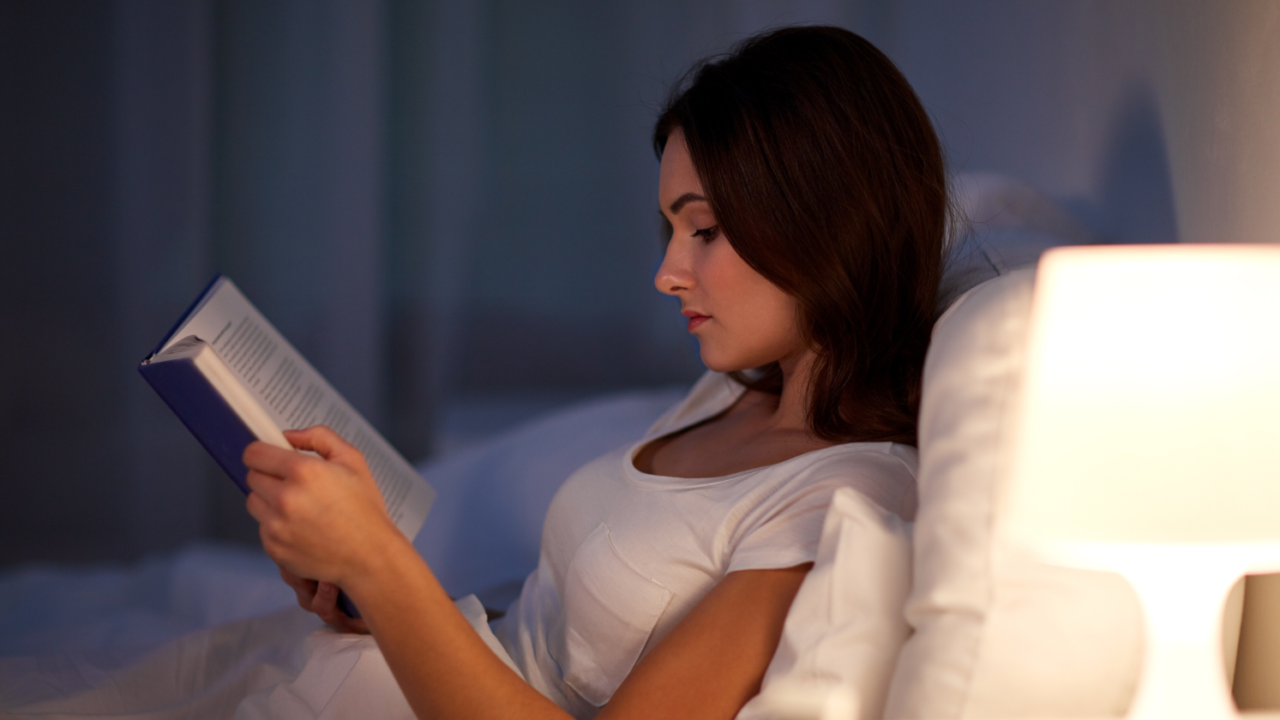
It’s late, the lights are low, and you’re settling into bed. One person picks up a phone or tablet to read a few more pages. Another reaches for a paperback on the bedside table.
They might be reading the same story. But research suggests their brains and bodies may be getting ready for sleep in quite different ways.
The body’s sleep signal
As evening falls, your body starts preparing for sleep. A tiny cluster of cells in the hypothalamus, deep in the brain, acts as your master body clock. When it senses darkness, it signals the pineal gland to release melatonin, a hormone that helps tell your body it’s time to rest.
Light, especially blue-enriched light, can suppress that signal. Special cells in the eye are particularly sensitive to blue wavelengths, and they report to the body clock that it’s still daytime. Many screens give off exactly this kind of light.
The e-reader experiment
In a well-known study published in 2014, researchers at Brigham and Women’s Hospital in Boston tested this directly. Twelve healthy young adults spent two weeks in a sleep lab. For five nights, they read on an iPad for four hours before bed. For another five nights, they read printed books in dim light.
The difference was clear. After reading on the iPad, participants’ melatonin was suppressed by more than half, and its nightly rise was delayed by about an hour and a half. They took about 10 minutes longer to fall asleep, had less REM sleep, and felt groggier the next morning. Reading the printed book caused no melatonin suppression.
How big is the effect in real life?
That study used bright tablets for four hours a night, which is more than most people read. Later research suggests the effect is often smaller with shorter, dimmer use, and that what you do on a screen matters too. Scrolling social media, watching gripping videos or answering emails can keep the mind alert in ways a quiet book usually doesn’t.
E-ink readers without a backlight, such as some basic Kindle models, work more like paper. They reflect light from the room instead of shining it into your eyes, so they appear to have little effect on melatonin.
Why a printed page helps the brain slow down
A paper book offers a simple, focused activity. There are no notifications, links or autoplaying videos pulling your attention in different directions. That makes it easier for the mind to settle.
Reading fiction also gives your thoughts somewhere to go other than the day’s worries. Many sleep experts recommend a relaxing, screen-free routine in the last 30 to 60 minutes before bed, and reading a printed book fits that perfectly.
What reading a novel does to the brain
There’s also evidence that reading a story affects the brain beyond the moment. In a 2013 study, neuroscientist Gregory Berns and colleagues at Emory University scanned the brains of 21 students while they read the novel Pompeii by Robert Harris over nine evenings.
During and after the reading period, the researchers saw increased connectivity in brain regions linked to language and to physical sensation. Some changes were still detectable five days after the participants finished the book. The researchers suggested readers may partly “feel” the experiences of characters in their bodies.
Those effects were measured over days, not years, and the study was small. But it suggests that immersing yourself in a story can leave short-term traces in how the brain communicates.
How to build a better bedtime routine
If you struggle to fall asleep, try switching to a printed book, or an e-ink reader without a backlight, for the last half hour before bed. Use a warm, dim bedside lamp instead of bright overhead lights.
If you do use a phone or tablet, turn the brightness down, switch on night mode, and avoid anything stressful or highly engaging. And try to keep your phone out of reach, so the last thing you see before sleep isn’t a notification.
Small changes like these won’t fix every sleep problem, but they can make it easier for your brain to recognize that the day is done.