 By
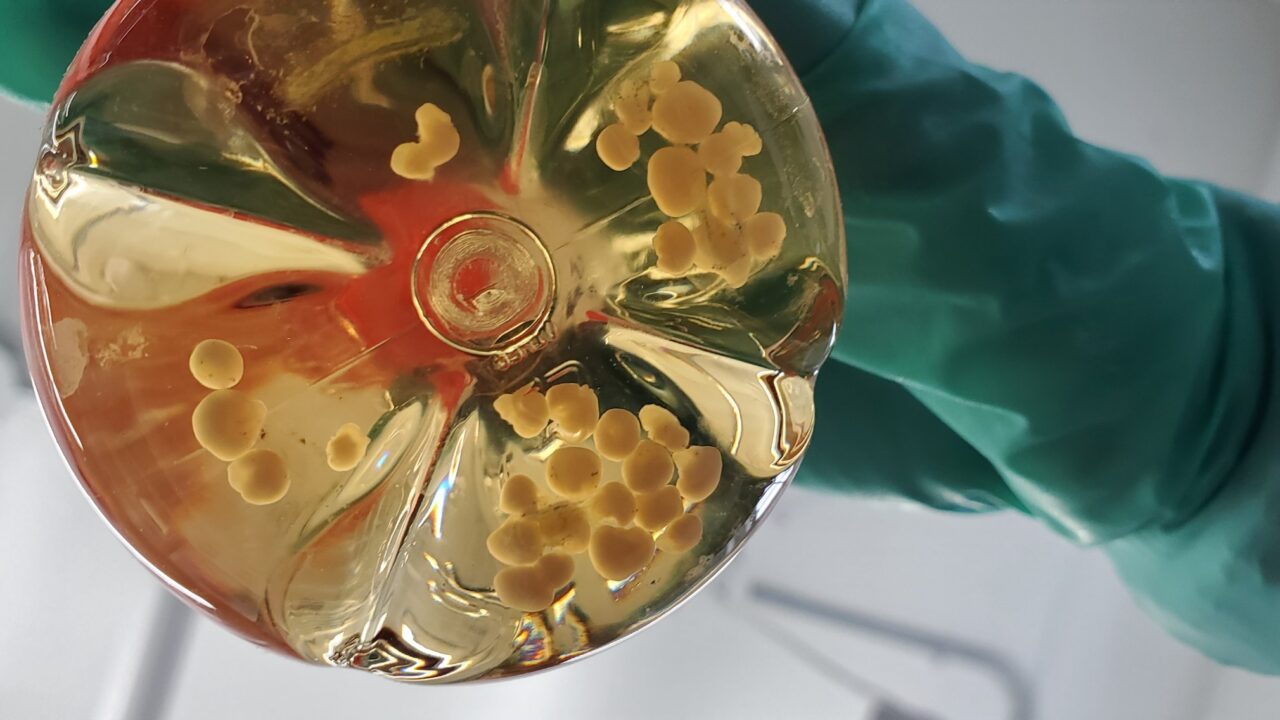
A clump of living human brain cells, grown from stem cells and hooked up to a computer chip, got better at telling eight male speakers apart by the way they pronounced Japanese vowels. The reported accuracy went from about 51 percent at the start to 78 percent after two days of training.
The result comes from Brain organoid reservoir computing for artificial intelligence, published in Nature Electronics on 11 December 2023 by H. Cai, Z. Ao, C. Tian and colleagues, with Feng Guo of Indiana University Bloomington as corresponding author. The team calls the setup Brainoware.
The paper's own summary of the approach is dry. "Here we report an artificial intelligence hardware approach that uses adaptive reservoir computation of biological neural networks in a brain organoid," the authors write in the abstract. They illustrate it, they say, with speech recognition and nonlinear equation prediction.
Here is the question the headline number does not answer on its own: when the score goes up, what has changed, the tissue or the software reading the tissue?
Start with what sat on the chip. Brain organoids, as MIT Technology Review described them when it quoted Guo on the day the paper came out, are "clumps of human brain cells grown in a dish." Guo and his team "generated a brain organoid from stem cells, attached it to a computer chip, and connected their setup, known as Brainoware, to an AI tool," the same report said.
No part of that arrangement includes ears. The sources describe no route by which a sound in a room could reach the cells.
The method is reservoir computing. The general idea is that you push a signal into a physical system whose responses are complicated but consistent, and then train a separate readout to map those responses onto an answer. Nobody rewires the reservoir by hand. Brainoware puts living neurons where a silicon or software reservoir would usually sit, and the abstract describes the exchange as computation performed "by sending and receiving information from the brain organoid using a high-density multielectrode array."
The speech test was a benchmark test. The researchers "also gave it a benchmark test for speech recognition, using 240 audio clips of eight people pronouncing Japanese vowels," MIT Technology Review reported. The eight speakers were male, and the task was speaker identification, meaning working out which of the eight was talking. The clips were vowels, not words, per the report.
The audio never arrived as audio. "The clips were converted into electrical signals and applied to the Brainoware system," the same account said. "This generated signals in the neural networks of the brain organoid, which were then fed into an AI tool for decoding."
So the chain runs: vowel sound, electrical pulse pattern, organoid response, trained decoder, identity of a speaker.
On day zero that chain picked the right speaker roughly half the time, about 51 percent. After two days of training it reached 78 percent.
The abstract attributes learning to changes in the tissue. "By applying spatiotemporal electrical stimulation, nonlinear dynamics and fading memory properties are achieved, as well as unsupervised learning from training data by reshaping the organoid functional connectivity," they write. Fading memory is the property that lets a system's current state still carry traces of what hit it a moment earlier, which is what makes a reservoir useful for signals that unfold over time. Unsupervised learning is the authors' term for what the stimulation produced, which they attribute to reshaped functional connectivity.
MIT Technology Review's account of the researchers' reasoning is more cautious than the headline figure suggests. When the team applied electrical stimulation, Brainoware responded and changes occurred in its neural networks, and according to the researchers this suggested the hybrid system did process information and could perhaps even perform computing tasks without supervision. Perhaps, as the report put it.
Guo's own description was restrained. The brain organoid and AI system could decode the signals from the audio recordings, which is a form of speech recognition, he said. "But the accuracy was low," he said, in that report. The report then adds, in its own words rather than Guo's: "Although the system improved with training, reaching an accuracy of about 78%, it was still less accurate than artificial neural networks, according to the study."
He framed the work as a start. "This is a first demonstration of using brain organoids [for computing]," Guo said. "It's exciting to see the possibilities of organoids for biocomputing in the future."
The sharpest outside line is the one to hold onto. Lena Smirnova, an assistant professor of public health at Johns Hopkins University, points out that brain organoids do not have the ability to truly hear speech but simply exhibit "a reaction" to pulses of electrical stimulation from the audio clips, MIT Technology Review reported.
That distinction does most of the work in reading this study honestly. Reacting in a structured, repeatable way to a pattern of current is exactly what a reservoir is supposed to do. Neither benchmark is a test of perception.
Smirnova was not dismissive, saying it is "a really good demonstration that shows the capabilities of brain organoids," according to the same report.
Several limits are worth putting side by side. The task was telling speakers apart from pronounced vowels, so no words or sentences were recognised. The report also noted that the study did not demonstrate whether Brainoware can process and store information over the long term or learn multiple tasks. The 78 percent figure describes one benchmark after two days. And a trained AI tool, not the organoid, turned the organoid's responses into an answer.
Which brings back the open question. The authors say training reshaped the organoid's functional connectivity. How much of the gain sits in the tissue and how much in the decoder is the question an independent replication would need to answer.
There is a practical obstacle too, and it has nothing to do with intelligence. Growing the cell cultures in a lab and keeping them alive long enough to compute with them is, as MIT Technology Review put it, "a huge undertaking."
One advantage the report points to is energy. Conventional computers handle numbers far better than brains do, that report noted, while human brains are better at processing complex information on relatively little energy. Guo has argued that biological computers could overcome challenges facing silicon machines, such as bottlenecks in data processing.
Nothing in the abstract or the researchers' quoted comments is a claim about awareness. The work went through peer review, with Nature Electronics thanking Arti Ahluwalia and the other, anonymous, reviewer or reviewers. The journal lists statistical source data for the paper's Figures 2, 3 and 4 alongside the article, while the data availability statement says all other data supporting the findings are available from the corresponding author upon reasonable request.
What the study shows is narrow and real. Human neurons on an electrode array, given two days of patterned electrical stimulation, produced responses that a trained decoder could sort into eight speakers more than three-quarters of the time, up from roughly half at the start. The organoid was not listening to anyone.
Two benchmarks, two days of training on the speech test, and one number the corresponding author called low. That is what that benchmark measured.
Cai, H., Ao, Z., Tian, C. et al. (2023). Brain organoid reservoir computing for artificial intelligence. Nature Electronics, 6, 1032 to 1039. DOI: 10.1038/s41928-023-01069-w
Sources:
- Cai, H., Ao, Z., Tian, C. et al., "Brain organoid reservoir computing for artificial intelligence," Nature Electronics, 2023, https://www.nature.com/articles/s41928-023-01069-w
- "Human brain cells hooked up to a chip can do speech recognition," MIT Technology Review, 2023, https://www.technologyreview.com/2023/12/11/1084926/human-brain-cells-chip-organoid-speech-recognition/