Know Your Brain: Glial Cells
For much of the history of neuroscience, glial cells were treated like structures that existed mainly to support and hold neurons together. In fact, the term glia comes from the Greek word for “glue,” reflecting this early assumption about their role. Over the last several decades, however, our understanding of glial cells has changed dramatically. We now know that glial cells are not just passive scaffolding for neurons; they are active, essential participants in nearly every aspect of brain function.
Types of glial cells
Glial cells are typically divided into two broad categories: microglia and macroglia.
Microglia act as the primary immune defense of the central nervous system. Unlike most other glial cells, they originate from immune-related cells outside the brain early in development. Microglia continuously move through brain tissue, surveying their environment. When they encounter damaged cells, pathogens, or debris, they engulf and remove it in a process called phagocytosis. In this way, microglia are critical for both responding to injury and maintaining normal brain health.
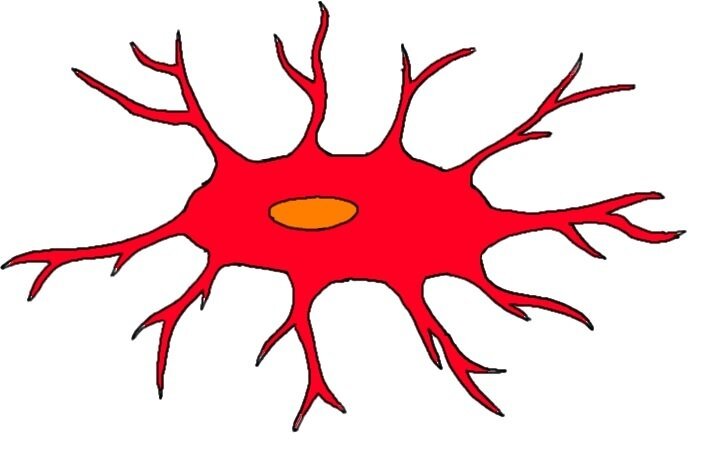
The rest of the glial cell types are typically classified as macroglia, a group that includes astrocytes, oligodendrocytes, ependymal cells, radial glia, and (in the peripheral nervous system) Schwann cells and satellite cells.
Astrocytes
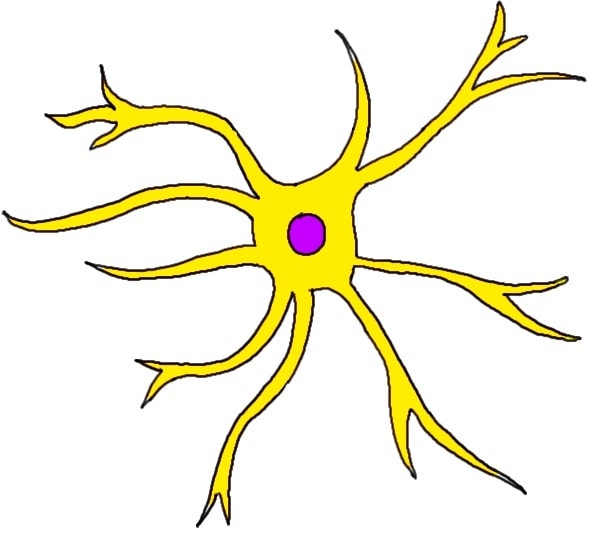
Astrocytes are star-shaped cells that are among the most abundant glia in the brain. They have numerous functions, many of which are essential for keeping neurons functioning properly.
Astrocytes help supply neurons with nutrients by linking blood vessels to neural tissue. They also play a key role in maintaining the chemical environment around neurons, regulating levels of ions and neurotransmitters to ensure that communication between neurons proceeds efficiently.
In addition, astrocytes are important for maintaining the blood-brain barrier, a selective boundary that prevents many potentially harmful substances in the bloodstream from entering the brain. They also participate in the brain’s response to injury, helping to repair damaged tissue.
Oligodendrocytes and Schwann cells
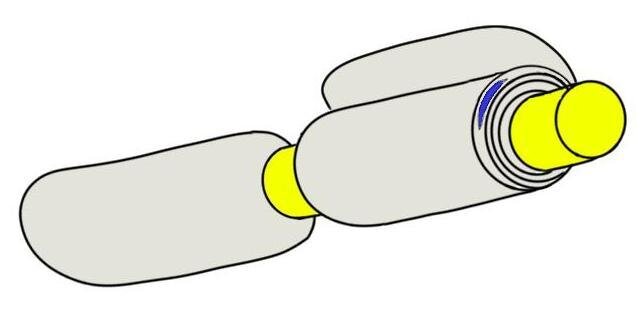
Some glial cells are specialized for producing myelin, a fatty, insulating substance that wraps around axons and increases the speed at which electrical signals travel.
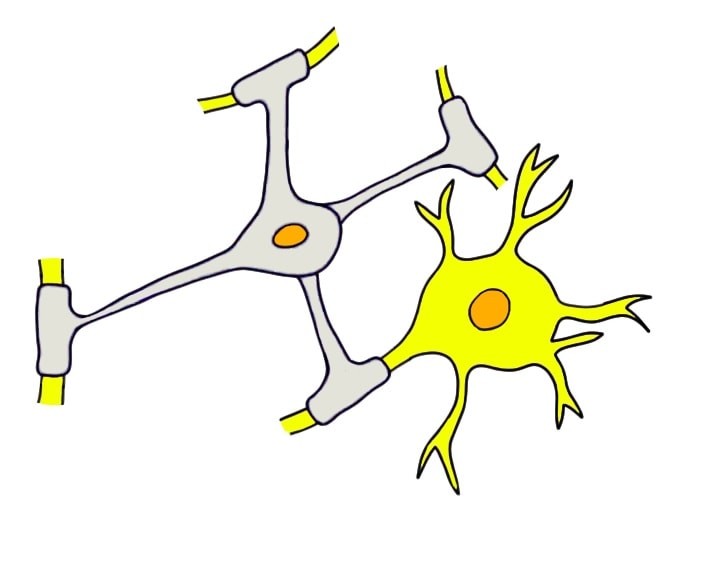
In the central nervous system, this role is carried out by oligodendrocytes. A single oligodendrocyte can extend its processes to form myelin sheaths around segments (internodes) of multiple neurons.
In the peripheral nervous system, Schwann cells perform a similar function. Unlike oligodendrocytes, each Schwann cell typically myelinates only a single segment of one axon. Schwann cells also play a role in supporting the regeneration of damaged peripheral nerves—something that is much more limited in the central nervous system.
Ependymal cells
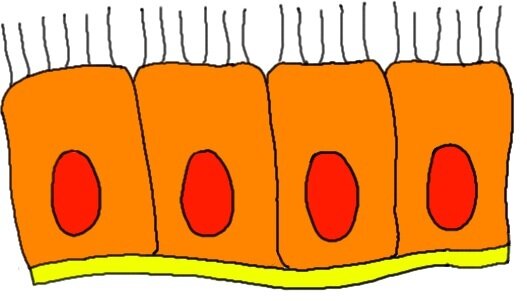
Ependymal cells line the fluid-filled cavities (ventricles) of the brain and the central canal of the spinal cord. They are involved in producing and circulating cerebrospinal fluid (CSF).
CSF cushions the brain, helping to protect it from mechanical injury, and also serves important roles in removing waste products and distributing nutrients and signaling molecules throughout the central nervous system.
Radial glia
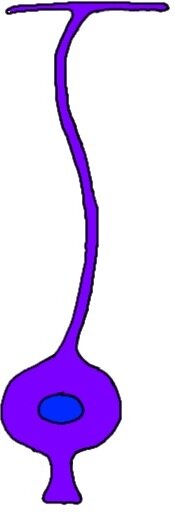
Radial glia are especially important during brain development. They serve two key functions.
First, they act as neural progenitor cells, meaning they can divide to produce new neurons and other glial cells. Second, they provide a kind of scaffolding that developing neurons use to migrate to their proper locations in the brain. Even in the adult brain, cells with properties similar to radial glia persist in certain regions and contribute to limited forms of neurogenesis.
Satellite cells
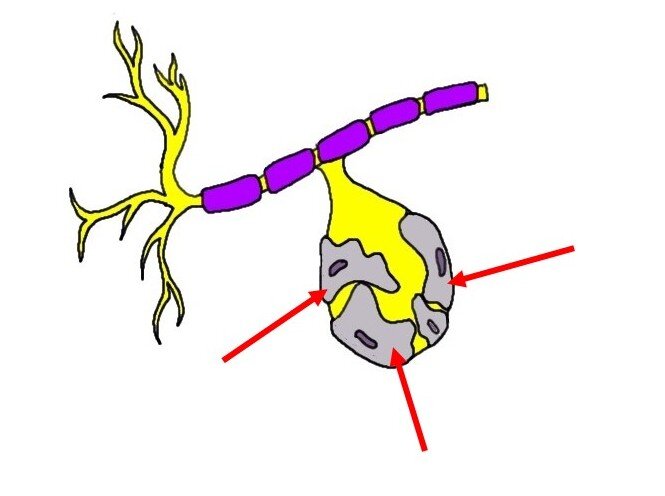
In the peripheral nervous system, satellite cells surround the cell bodies of neurons in structures like sensory ganglia. They provide support and help regulate the chemical environment around these neurons.
Although their functions are not as well understood as those of some other glial cells, satellite cells are thought to influence how sensory information is processed and may play roles in conditions like chronic pain.
Summary
Although once thought to simply “glue” the nervous system together, glial cells are now recognized as indispensable partners in brain function. From immune defense and nutrient support to myelination and neural development, these cells play diverse and critical roles. As research continues, it is becoming increasingly clear that understanding the brain requires looking beyond neurons alone and considering the many ways glial cells contribute to how the nervous system works.
References:
Purves D, Augustine GJ, Groh JM, Huettel SA, LaMantia AS, White LE, eds. 2024. Neuroscience. 7th ed. New York: Oxford University Press.
Vanderah TW, Gould DJ. Nolte's The Human Brain. 8th ed. Philadelphia, PA: Elsevier; 2021.