By
On a morning in March 2016, Alex Honnold lay inside a brain scanner at the Medical University of South Carolina in Charleston. For about 45 minutes, images flashed past his eyes. Some were ordinary. Others showed mutilated bodies, burn victims and scenes most people would rather not see.
When he came out, he shrugged. As he later recalled, his reaction to the images was basically “whatever.”
The scientist running the scan wanted to know why.
The man who climbs without a rope
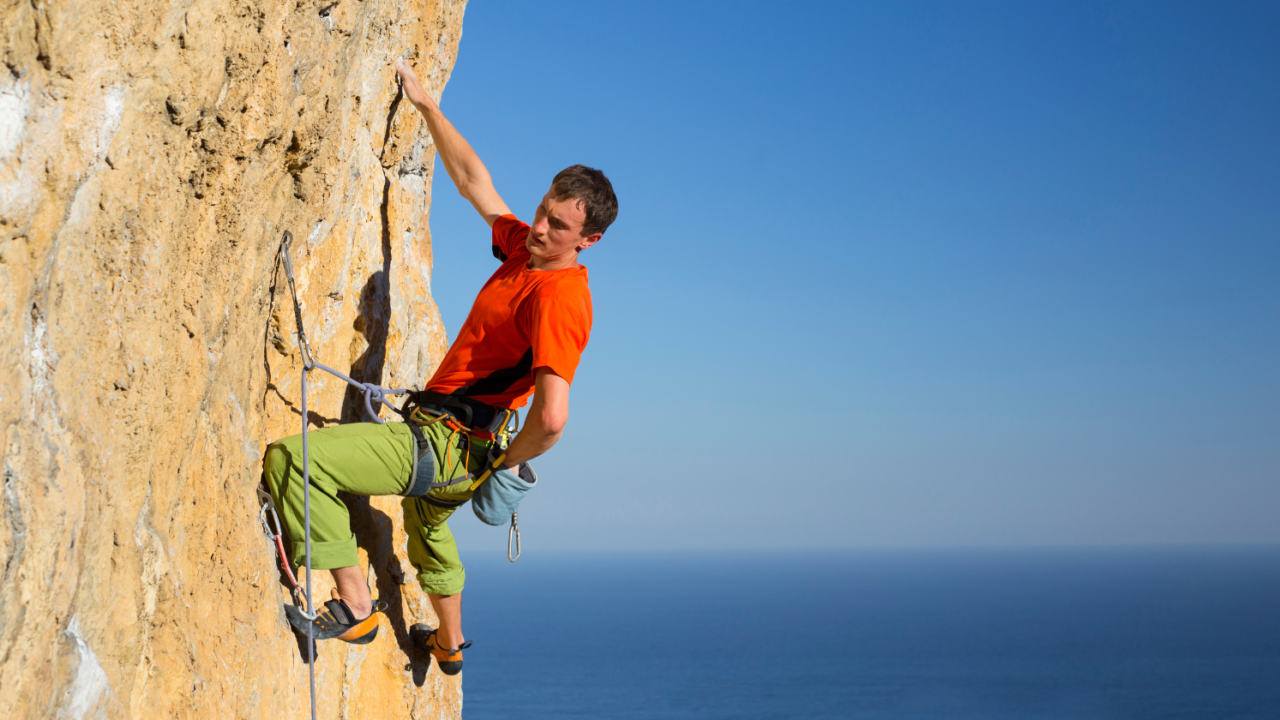
Honnold is the world’s best-known free solo climber. He climbs huge rock faces with no rope, harness or protective gear. One slip on most of his routes would mean death.
By 2016, he had already made headlines for ropeless climbs of Half Dome in Yosemite and other giant walls. People who watched him often wondered whether something about his brain was different. One neurobiologist who saw him speak reportedly guessed that his amygdala, the brain’s threat-response center, wasn’t firing.
Cognitive neuroscientist Jane Joseph decided to look. She had been one of the first researchers to scan the brains of “high sensation seekers,” people who crave intense and risky experiences. The story of the scan was told in a 2016 Nautilus feature by journalist J.B. MacKinnon.
The scan
The first question was simple: did Honnold even have a normal amygdala? He did. The almond-shaped structures, one on each side of the brain, looked perfectly healthy.
Next, Honnold viewed around 200 images designed to disturb or excite. For comparison, Joseph also scanned a control subject, a rock climber of similar age who was also a high sensation seeker.
In the control climber, the amygdala lit up strongly in response to the most arousing images. In Honnold, Joseph saw no activation there at all. Only the brain areas that process vision were active, showing he was awake and looking at the screen.
A quiet reward system too
Joseph then ran a second test, a reward task in which Honnold could win small amounts of money by clicking a button quickly. In most people, this lights up the brain’s reward system, including the nucleus accumbens.
In the control climber, the response was strong. Joseph said his brain looked like a lit-up Christmas tree. Honnold’s was quiet again.
One possible explanation is that Honnold needs far more intense experiences to feel stimulated. Questionnaires showed he scored roughly twice as high on sensation seeking as the average person, and higher than the average high sensation seeker.
Born this way, or trained?
The scan couldn’t tell whether Honnold was born with a less reactive fear system or developed it over time. Joseph considered both.
Honnold himself has said he works hard to manage fear. Before his biggest climbs, he rehearses the moves on a rope again and again, sometimes for years, until every hold feels familiar. He has also described visualizing difficult sections until they no longer frighten him. Repeated exposure is a well-known way to reduce fear responses, so years of climbing may have gradually turned down his brain’s alarm.
It’s also important to note what the scan doesn’t show. Honnold isn’t fearless in the way people with damaged amygdalae can be. In rare cases, such as a woman known in research as S.M., disease destroyed both amygdalae, leaving her unable to feel fear in situations most people would find terrifying. Honnold’s amygdala is intact. He has said he does feel fear sometimes, particularly when a climb isn’t going to plan.
El Capitan
On June 3, 2017, a little over a year after the scan, Honnold free soloed El Capitan in Yosemite National Park. He climbed the Freerider route, about 3,000 feet of sheer granite, with no rope, in just under four hours.
It was widely called one of the greatest feats in the history of athletic achievement. The climb was captured in the documentary Free Solo, which won the Academy Award for Best Documentary Feature.
Honnold had spent years preparing, rehearsing every section with a rope. He’d even abandoned an earlier attempt when it didn’t feel right. That combination of calm and careful planning may be as important as anything going on in his amygdala.
What one brain can tell us
Joseph has described the scan as an observation, not a study. It involved one person and one comparison subject, and the results can’t be generalized.
But Honnold continues to push the limits. In January 2026, he climbed Taipei 101, one of the world’s tallest skyscrapers, without a rope, in about an hour and a half. His brain may not explain everything about how he does it, but it offers a fascinating glimpse at how differently fear can work from one person to the next.