 By
A woman who met every clinical criterion for the vegetative state produced the same pattern of brain activity as healthy volunteers when she was asked, during a functional MRI scan, to imagine playing tennis. She was 23, and five months earlier she had suffered a severe traumatic brain injury in a road traffic accident. The case was published in Science on 8 September 2006 by Adrian Owen and colleagues at the Medical Research Council Cognition and Brain Sciences Unit and Addenbrooke's Hospital in Cambridge, with co-authors at the University of Liege.
Owen and colleagues wrote that her decision to cooperate by imagining particular tasks when asked to do so amounted to an act of intention, one that confirmed "beyond any doubt that she was consciously aware of herself and her surroundings". That is a claim about her state during the scanning session rather than about the five months before it. A patient who shows no sign of awareness at the bedside may still follow instructions in the scanner, which is why this one case still matters. What a scan like this proves is still argued over.
The injury happened in July 2005. Five months later she remained unresponsive, with preserved sleep-wake cycles. The paper describes the vegetative state as a disorder in which patients who emerge from coma appear to be awake but show no signs of awareness, and says the diagnosis depends crucially on there being no reproducible evidence of purposeful behaviour in response to external stimulation. A multidisciplinary team assessed her and concluded that she fulfilled all the criteria under international guidelines, the 2003 Royal College of Physicians guidance cited in the paper. She is not named, and the paper says nothing about what happened to her afterwards.
There were two scanning studies. In the first, the team played her spoken sentences and compared her responses with responses to acoustically matched noise. Speech-specific activity appeared on both sides in the middle and superior temporal gyri, equivalent to what healthy volunteers showed with the same stimuli, and sentences containing ambiguous words produced an extra response in a left inferior frontal region, again similar to volunteers. The authors called that suggestive but not unequivocal evidence that a person is consciously aware, pointing to studies of implicit learning and priming, and of learning during anaesthesia and sleep, in which speech perception and semantic processing go on without awareness.
So they ran a second study in which she had to do something. While she was in the scanner she was given spoken instructions at specific points: imagine playing a game of tennis, and imagine visiting all the rooms of her house, starting from the front door. The third instruction, which served as the baseline, was simply to relax. Healthy volunteers were given the same tasks.
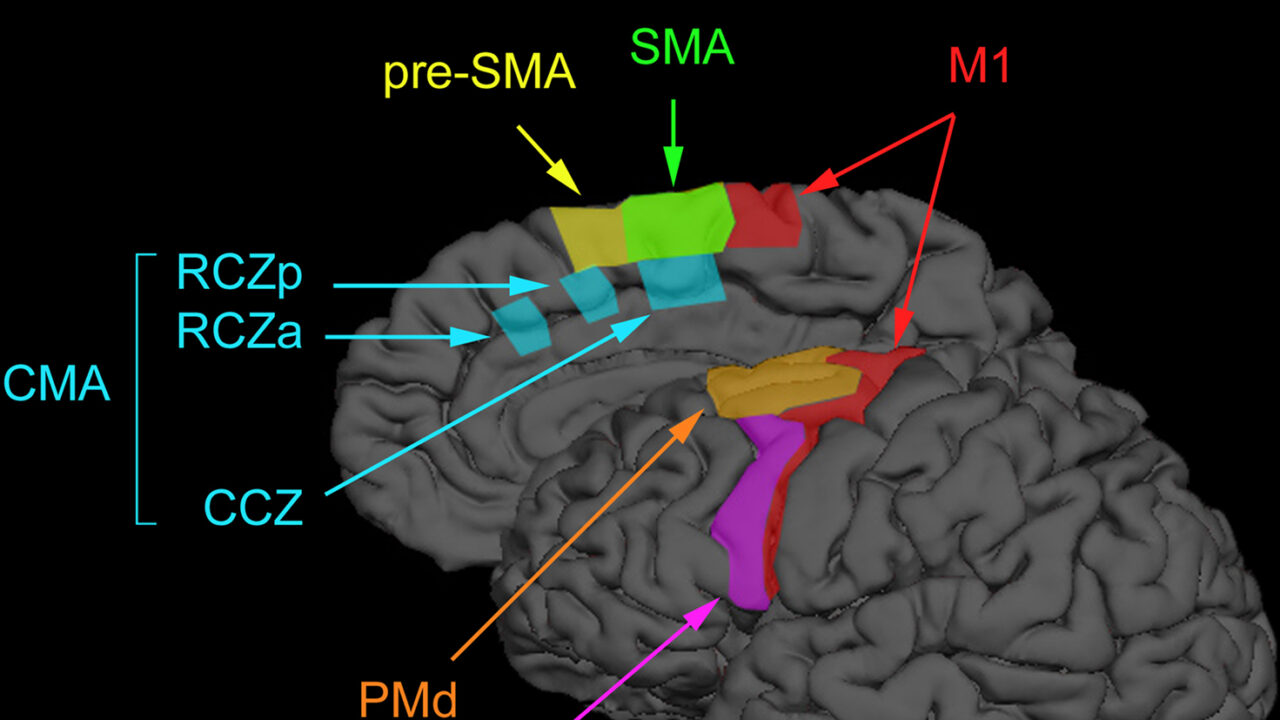
When she was asked to imagine tennis, significant activity appeared in the supplementary motor area. When she was asked to imagine moving around her home, it appeared in the parahippocampal gyrus, the posterior parietal cortex and the lateral premotor cortex. "Her neural responses were indistinguishable from those observed in healthy volunteers", the paper says, and the figure caption puts that comparison group at 12 people, with all results thresholded at P < 0.05 corrected for multiple comparisons.
Science published a technical comment on 2 March 2007, just under six months later, from Parashkev Nachev, in the department of clinical neuroscience at Imperial College London, and Masud Husain of University College London. On the two big claims, covert awareness and a capacity for intention, they wrote that neither "can be securely inferred from the evidence presented".
Their first objection is a logical one. Owen and colleagues were right, they wrote, that an absence of brain activation is not proof that the associated behaviour is not taking place, but the reverse does not follow, they argued, because the presence of activation is only sufficient evidence for the behaviour if the same activation has been shown not to occur without it. Nachev and Husain pointed to a literature on involuntary and elaborate activation of task-specific brain areas when people are passively exposed to stimuli associated with an action, with or without conscious awareness.
Then there is the comparison condition. The imagery instructions were measured against the instruction to relax, which does not match them for the semantic associations of the individual words, and a better comparison, they suggested, would have been "imagine playing tennis" against "do not imagine playing tennis". All the activation reported in the patient, they wrote, "could therefore have been wholly automatic and unconscious". They objected to the word decision as well. They wrote that "one cannot speak of a decision when there is no evidence of choice", since had there been no response from her brain, the authors would have concluded only that she was unaware, so whether she could choose anything was never put to the test.
The limits on the original paper are easy to list. It is a single case, reported in a one-page report. The authors stated themselves that negative findings in such patients cannot be used as evidence for lack of awareness, because false negative findings in functional neuroimaging studies are common, even in healthy volunteers, which means the method cannot be used to rule awareness out.
The authors wrote that she responded to spoken commands through her brain activity rather than through speech or movement.
They also wrote that the presence of robust task-dependent responses to command, without any practice or training, suggests a method by which some non-communicative patients might use their residual cognitive capabilities to communicate by modulating their own neural activity. That was a proposal rather than a result.
Some of it was tested later. In 2010, Monti and colleagues, including Owen, Laureys and Pickard, scanned 54 patients with disorders of consciousness at referral centres in Cambridge and Liege. Five were able to wilfully modulate their brain activity. In three of those five, further bedside testing revealed some sign of awareness, and in the other two no voluntary behaviour could be detected clinically. One patient used the technique to answer yes or no to questions during functional MRI while communication at the bedside remained impossible. The same abstract puts the rate of misdiagnosis in these conditions at approximately 40 per cent.
Bodien and colleagues, in a 2024 cohort study, collected task-based fMRI and EEG data from 353 adults with disorders of consciousness at six international centres. A response to commands was detected in 60 of the 241 participants (25 per cent) who had no observable response to verbal commands, and in 43 of 112 participants (38 per cent) who did have one. That was a convenience sample, with fMRI only or EEG only available for about two thirds of participants, so the 25 per cent describes those people rather than the patient population at large.
Reading the 2006 paper and the comment on it side by side, I think the narrow finding holds. With no practice and no training, a patient who met the criteria for the vegetative state produced activity on command that matched a group of healthy volunteers, in two different patterns for two different instructions. Whether producing it required her to be aware is the part the study did not test, and the comparison its critics wanted, an instruction not to imagine playing tennis, was never put to her.
Sources
- Owen AM, Coleman MR, Boly M, Davis MH, Laureys S, Pickard JD, Detecting Awareness in the Vegetative State, Science 313:1402, 8 September 2006.
- Nachev P, Husain M, Comment on "Detecting Awareness in the Vegetative State", Science 315:1221a, 2 March 2007.
- Monti MM, Vanhaudenhuyse A, Coleman MR, Boly M, Pickard JD, Tshibanda L, Owen AM, Laureys S, Willful modulation of brain activity in disorders of consciousness, New England Journal of Medicine 362:579, 3 February 2010.
- Bodien YG, Allanson J, Cardone P, et al., Cognitive Motor Dissociation in Disorders of Consciousness, New England Journal of Medicine 391:598, 14 August 2024.