 By
The familiar claim that money can buy happiness as long as you spend it on someone else rests on a single experiment with 46 participants, published in Science on 21 March 2008.
People told to spend a small windfall on another person reported more happiness that evening than people told to spend it on themselves, and the size of the windfall made no difference.
A close replication of that experiment, published in PLOS ONE in 2022 with 133 participants, did not reproduce the result using the original measure and analysis. On that measure the people who spent on others came out directionally but non-significantly less happy. A second, more direct happiness question added by the replication team did show an effect in the original direction.
The line that money buys happiness if you spend it on others is everywhere now. I wanted to see what the first small experiment actually found, and how the later replication came out.
The open question is whether the original result holds up at all.
The 2008 paper came from Elizabeth Dunn and Lara Aknin in the psychology department at the University of British Columbia in Vancouver and Michael Norton at Harvard Business School. Its abstract puts the argument as a suggestion, that "how people spend their money may be at least as important as how much money they earn".
Most of the paper's evidence was not experimental. A nationally representative survey of 632 Americans found that higher prosocial spending, meaning gifts for others plus charitable donations, was linked to greater happiness, while personal spending was not related to it.
A separate study followed 16 employees before and after a profit sharing bonus, and found that the share of the bonus they put towards others predicted their later happiness better than the size of the bonus.
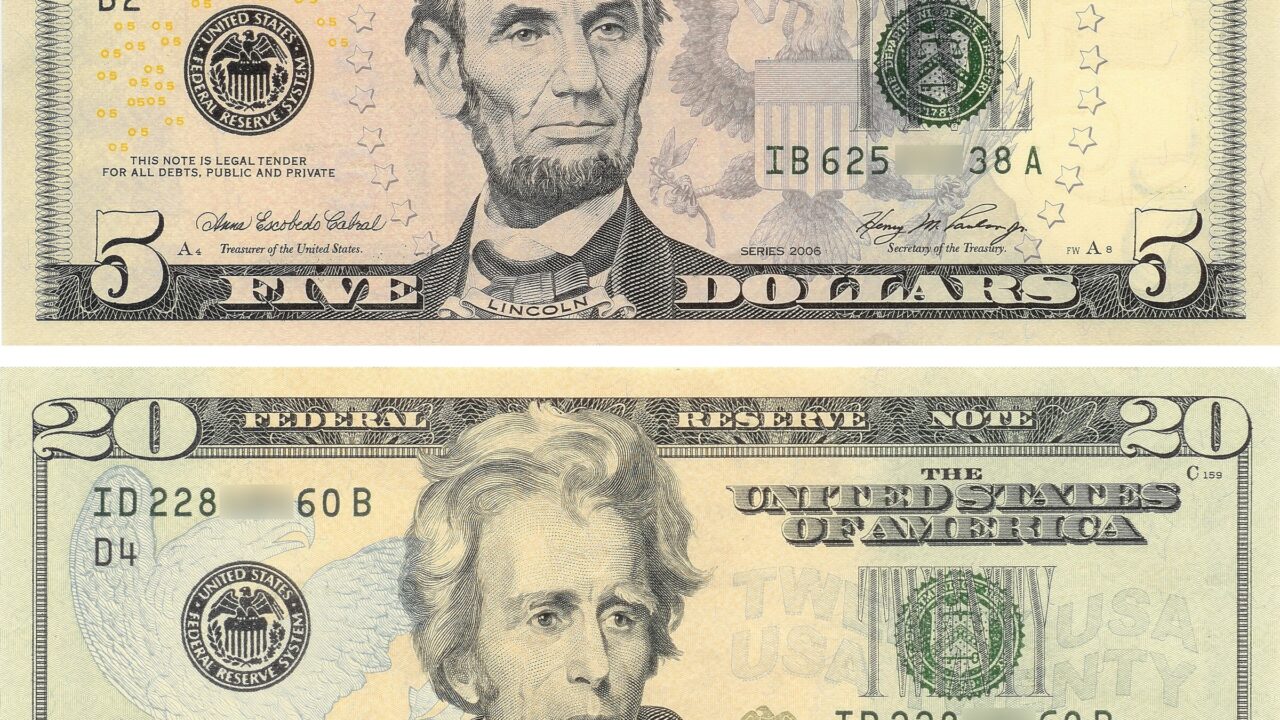
The 2022 replication team treat it as the only experiment in the paper, and the place where the critical experimental results appeared. Participants rated their happiness in the morning and were then given an envelope containing either $5 or $20, which they were asked to spend by 5 p.m. that day.
Those in the personal condition were told to spend it on a bill, an expense or a gift for themselves. Those in the prosocial condition were told to buy a gift for someone else or make a charitable donation. They were called after 5 p.m. and reported their happiness again.
Morning happiness was entered as a covariate, meaning differences in happiness before the money arrived were statistically accounted for. On that basis the spending instruction mattered, F(1,41) = 4.39, P < 0.04, with the prosocial group at a mean of 0.18 on the standardised happiness composite, a single score built from several mood and happiness ratings, as the 2022 replication paper describes it, and the personal group at minus 0.19.
Windfall size made no difference. Neither the main effect of windfall size nor its interaction with spending direction came close to significance, as the authors report in the paper.
The authors then described the four conditions to 109 other students at the same university and asked which one they would pick to be happiest. Sixty-nine chose personal spending over the 40 who chose prosocial spending, and 94 chose $20 over the 15 who chose $5.
The replication team later described the finding as highly influential, and said it changed how people think about the consequences of prosocial behaviour.
Garam Kim, Ingrid Adams, Malik Diaw, Mira Celly, Leif Nelson and Minah Jung, at New York University and the University of California, Berkeley, set out to test it directly. Their reasons, set out in the 2022 paper, were that the original was not preregistered, meaning its design and analysis plan were not filed publicly before the data came in, that it had a small sample across four conditions, and that it turned on a critical statistical test at p = .042, which they say may suggest limited evidential value.
Their own study was preregistered. They ran it in 2018 on undergraduates in an introductory marketing class at the University of California, Berkeley, who took part for partial course credit. The original, as the 2022 authors describe it, used students at a large public Canadian university who were approached by an experimenter on campus.
Of 137 participants, four did not finish and were excluded under the preregistration, leaving 133. The paper lists 67 people in the personal condition and 66 in the prosocial one.
The replication team changed several things from the original design. Everyone received $10 rather than $5 or $20, because the original had found no effect of amount. The instruction was simplified to a gift for yourself or a gift for someone else, dropping the bill and the charitable donation, so that the only difference between conditions was the recipient.
The evening report arrived as an emailed link instead of a phone call. Participants were also asked in the morning to predict how happy the spending would make them, and those in the prosocial condition to predict how happy the recipient would be.
On the original measure, an eleven item composite of positive emotion ratings and an overall happiness rating, with morning happiness held constant, the result was F(1,130) = .35, p = .557. Dropping the covariate changed nothing, p = .842.
A coding check by workers blind to condition confirmed that people in the prosocial condition really had bought things for other people.
The second happiness measure asked something narrower than the composite. It asked how happy people were immediately after spending the $10 on themselves or on someone else, on a five point scale. There the prosocial group scored 4.36 against 4.04 for the personal group, t(131) = 2.27, p = .025, and the gap held when morning happiness was controlled for.
The authors label this analysis exploratory and say they do not directly compare its effect size with the original one. Their own summary of the paper is that they "observed mixed results".
Using the spread of their own estimate, Kim and colleagues calculate that the original study, at 46 participants, had slightly under 10 per cent power to detect a significant effect. On what follows from that, they write that they cannot accept the null hypothesis, but they can conclude the original was substantially underpowered.
Kim and colleagues also report limits of their own attempt. They say they were in contact with the original authors, who raised two points. One is power again. The 2022 paper cites a meta-analysis of acts of kindness by Curry and colleagues, which suggests positive psychology interventions need more than 200 observations per treatment for 80 per cent power, a standard both the 2008 study and the 2022 replication fall well short of.
The other point is that asking people in the morning to forecast their own happiness may have shaped what they reported that evening, a possibility the replication authors say they do not have the data to rule out. Their changes to the instructions also mean the comparison is not exact, and both samples were students.
There is one more piece of evidence in the record. A registered replication report by Aknin, Dunn and colleagues, described in the 2022 paper, ran three studies with mixed but largely supportive results.
Its closest study to the original used 730 participants and produced a strong result. But participants bought goody bags made up of identical items, the amount of giving was reduced to $2.50, and all prosocial spending went to sick children at a local children's hospital, so nobody chose their own recipient or their own gift. Two further studies asked people to recall past spending rather than do any, and in one of those the recall manipulation failed to reject the null, meaning no effect was detected. In the other, which had a considerably larger sample of 5,199 participants, there was a small effect of prosocial spending.
Lara Aknin, a co-author of the 2008 study and now Distinguished Professor at Simon Fraser University, said in an email: "My colleagues and I have conducted much larger replications and made the case that large samples are needed to detect the short-term emotional rewards of generosity."
The published evaluation of the evidence she points to is a 2022 review by Aknin, Dunn and Ashley Whillans in Current Directions in Psychological Science. It considers all 15 published preregistered experiments on prosocial spending and concludes, in the review's words, that the causal impact of prosocial spending on well-being is "robust and replicable in large samples", meaning at least 200 participants per condition, the same threshold the Curry meta-analysis implies. The review reports that prosocial spending led to higher happiness than a relevant control condition in "six out of the seven large experiments with preregistered analyses testing this prediction".
The review also sets out where the effect thins out. Benefits appear relatively weak when people do not have a choice about how to give, when they lack information about how their donation will make a difference, or when they simply recall a past experience of giving. In the smaller studies, the review says, the results are "no more predictable than a coin flip", with only four of the eight smaller experiments providing any support.
None of that is a close replication of the $5 or $20 design from 2008. The large experiments the review discusses use other paradigms, including the goody-bag paradigm, in which participants buy a discounted bag of treats either for themselves or for a sick child at a local children's hospital.
Reading the two papers side by side, I think the position is this. A widely repeated finding rests on one small experiment that its own replicators estimate was substantially underpowered, and the one close replication of it split depending on which happiness question you look at.
What is missing is the original design, where people pick the recipient and the gift themselves, run at the size the Curry standard implies. Neither the 2008 experiment nor the 2022 close replication reports one.
Sources
- Dunn, E.W., Aknin, L.B. and Norton, M.I., Spending Money on Others Promotes Happiness, Science 319(5870), 21 March 2008.
- Dunn, E.W., Aknin, L.B. and Norton, M.I., Spending Money on Others Promotes Happiness, author PDF, Science 319(5870), 21 March 2008.
- Kim, G., Adams, I., Diaw, M., Celly, M., Nelson, L.D. and Jung, M.H., Prosocial spending encourages happiness: A replication of the only experiment reported in Dunn, Aknin, and Norton (2008), PLOS ONE 17(9): e0272434, 2022.
- Kim, G. et al., Preregistration, AsPredicted #tj87d, linked in the 2022 PLOS ONE paper.
- Aknin, L.B., Dunn, E.W. and Whillans, A.V., The Emotional Rewards of Prosocial Spending Are Robust and Replicable in Large Samples, Current Directions in Psychological Science 31(6), 536-545, 2022.