By

On 19 November 2026, Rockstar Games released Grand Theft Auto VI, one of the most anticipated video games ever made. Millions of players picked up their controllers to explore its sprawling, sun-soaked world.
The next day, Neuralink posted a two-minute video of one player who didn’t need a controller at all. A participant in the company’s brain implant trial was guiding a speedboat beneath a bridge and into a narrow, tree-lined channel, using signals from his brain.
What the video shows
In the clip, the boat follows an in-game instruction to collect a package. A small inset shows the participant alongside a live dashboard of decoded brain signals and a graphic of a game controller, with buttons lighting up as commands register.
According to reports on the full video, the participant also drives a pick-up truck, flies a seaplane and fights opponents in the game. Neuralink didn’t name him or say which console he was using. The company’s caption on X was simply: “Playing GTA VI with a Neuralink.”
How a brain can play a game
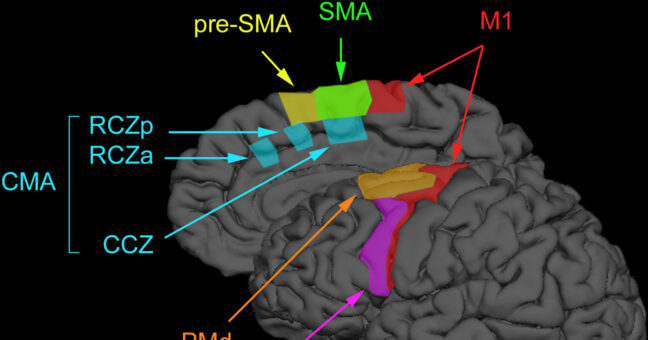
Neuralink’s device is a small implant placed in the skull, connected to the brain by more than a thousand tiny electrodes on thin, flexible threads. These sit in the motor cortex, the part of the brain that plans and controls movement.
When a person thinks about moving their hand, neurons in this area fire in particular patterns, even if paralysis stops the signal reaching their muscles. The implant records that activity and sends it wirelessly to a computer, where software learns to translate the patterns into actions, such as moving a cursor or pressing a button.
In the GTA video, the participant explains that to throw a punch, he’s just tapping his ring finger. He is likely attempting or imagining the movement, and the system turns that intention into a button press on a virtual controller.
Not Neuralink’s first game
Neuralink began implanting its device in people in 2024, in a trial called PRIME for people with paralysis. Its first participant, Noland Arbaugh, who is paralysed from the shoulders down after a diving accident, used it to play games including Civilization VI and Mario Kart.
The GTA demonstration goes a step further. Fast-paced console games require smooth, continuous control of steering, speed and camera direction at the same time. That’s harder than clicking on a screen, which makes it a useful showcase of how far the technology has come.
Built on decades of research
Neuralink didn’t invent the idea. Scientists have been developing brain-computer interfaces for decades. In a landmark 2006 study published in Nature, the BrainGate team showed that a man with paralysis could move a computer cursor and open emails using an implant in his motor cortex.
Since then, academic groups have helped people with paralysis type, control robotic arms and even turn attempted speech into words on a screen. Neuralink’s main innovations are its wireless design, large number of electrodes and robotic surgery system.
What we don’t know yet
Company videos are a demonstration, not scientific evidence. Neuralink has not published detailed peer-reviewed data on its trial, and it’s not clear how much training or setup the participant needed, how reliable the control is or how it compares with other systems. Independent experts have often called for more transparency.
Questions also remain about the long-term safety of brain implants and how well they keep working over years. Even so, the video offers a vivid glimpse of where the technology may be heading. For people who can’t use their hands, the ability to play the same games as everyone else, on launch day, is a real step towards being included in ordinary life.