By
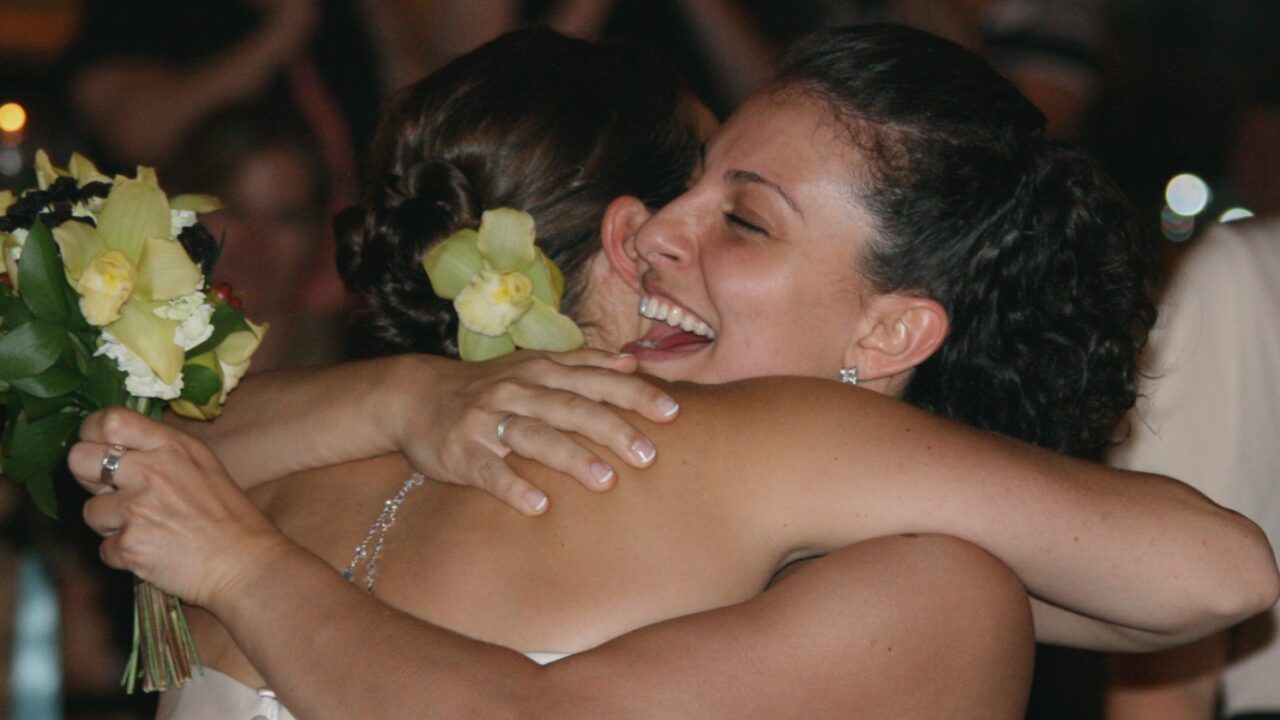
On days when people had some tension or conflict with another person, their mood fell less if someone had also hugged them, and the next day brought less bad feeling. Three researchers led by Michael Murphy of Carnegie Mellon University reported the pattern in 2018 in PLOS ONE, drawing on 14 evenings of phone calls with 404 healthy adults in the Pittsburgh area. Conflict days were worse days either way: the drop was smaller with a hug, not gone.
Each evening, an interviewer worked through the same questions. One of them, on the interview form used in the later of two studies, read: "Has anyone hugged you during the past 24 hours?" Another asked whether there had been any tension or disagreement with anyone.
Calls made for another reason
Nobody made these calls to study hugs. They belonged to two experiments, run from 2000 to 2004 and from 2007 to 2011, in which volunteers aged 18 to 55 were later exposed to a cold virus. The evening interviews took place in the weeks before that exposure, and the 2018 paper returned to them years afterward.
Readers of this site have met these people before. A 2015 analysis of the same volunteers found that the extra risk of infection that came with frequent conflict was smaller among people who were hugged on more days, a result this site has covered. That study compared one person with another. The mood study uses the same interviews to compare each person with themselves, one day against another.
What the calls recorded
On every call, participants also rated how much they had felt each of a list of moods since waking, among them happy, calm, tense and sad, from 0 (not at all) to 4 (a lot). The researchers combined 12 of those ratings into one score for positive mood and one for negative mood.
Across 5,622 interviews, people reported a hug on 62 percent of days and a conflict on about 14 percent. Conflict was unevenly spread: 125 of the 404 participants never reported one in the two weeks.
On conflict days, negative mood rose and positive mood fell. The authors put the size of those shifts in standardized effect sizes, and on that scale the rise in negative mood was about 1.6 on a conflict day without a hug and about 1.2 on one with a hug. The hug days showed a smaller rise, but most of it remained.
The difference reached into the next day for negative mood only: a conflict day without a hug was followed by more bad feeling than one with a hug. Next-day positive mood showed no significant difference.
On days without conflict, hugs went with only small differences in mood.
The pattern on conflict days did not differ significantly between men and women, between the 24 percent who were married or living as married and everyone else, or by how much support people felt they had when the study began.
What the analysis could not see
The hug and conflict questions went into the analysis as a simple yes or no. The authors wrote that participants were not asked who had hugged them, who the conflict was with or which of the two happened first, and that no data were collected on how severe a conflict was. So a hug counted whether it came from a partner, a friend or the person on the other side of the conflict, and whether it came before the conflict or after it.
The interviewers' scripts, which the project has published, show that the callers asked more than that. On the script for the later study, a yes to the disagreement question came with a note of who it had been with. The next evening, if the person said they had thought about it since, the caller asked how bothersome it had been, on a scale from 0 to 4. The paper makes no use of those answers.
That gap matters, because without knowing how serious each conflict was, the comparison is hard to read. Of 775 conflict days, 557 included a hug and 218 did not, and hugs were somewhat more common on conflict days than on other days. The conflict days without a hug may have differed in ways the analysis did not capture. The authors raise one possibility themselves: hugs may be more likely when a conflict is less severe, in which case part of the smaller drop would reflect milder conflicts, not the hug.
They also offer a reading that runs the other way. Conflict might interfere with the lift in mood that comes with a hug, which is a different thing from a hug softening a conflict. Their data fit the softening account better, they wrote, but could not rule the other out.
The paper calls its own findings correlational. Its participants were healthy adults in one American city, some of them interviewed more than two decades ago.
"This research is in its early stages," Murphy said in a statement when the paper was published. "We still have questions about when, how, and for whom hugs are most helpful. However, our study suggests that consensual hugs might be useful for showing support to somebody enduring relationship conflict."
Beyond the phone calls
The analysis rests on what people said over the phone. It used no hormone samples and no recordings of brain activity, so it cannot speak to what a hug does in the body. The explanation the authors favor is psychological: a hug may tell someone that support is at hand, without suggesting that they cannot cope alone.
Diary studies since then have linked hugs to better days, and one reached into the body. In a 2022 study, 94 adults reported each evening for a week how often they had embraced someone, and mood was better on days with more embraces. Its authors called the results "strictly correlational." A 2023 study of first-year college students measured the stress hormone cortisol in their saliva on two mornings. After days when a larger share than usual of a student's social interactions had included a hug, the rise in cortisol on waking was smaller. It, too, tracked what happened rather than testing hugs.
Murphy's team said what would be needed next: experiments that set up both the conflict and the hug, and check-ins several times a day to learn which came first. Evening phone calls could do neither.