By
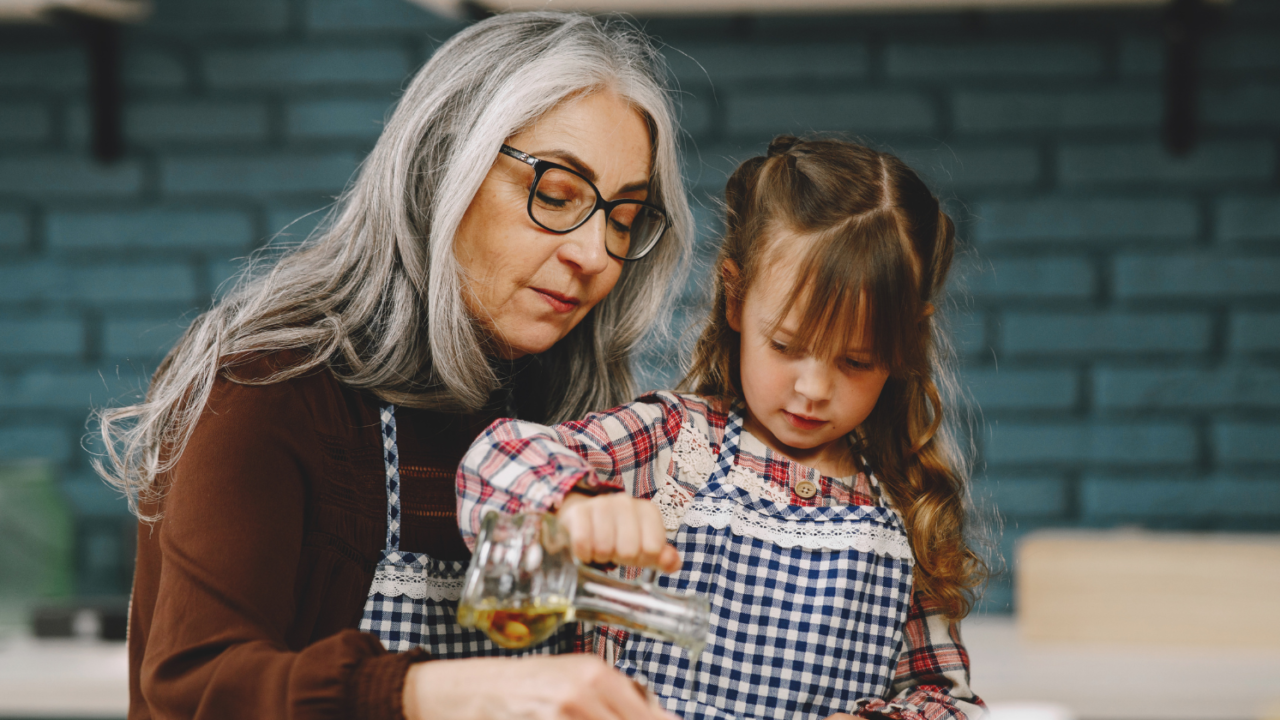
Many people notice it at some point. A grandmother who was firm and practical with her own children becomes noticeably gentler with her grandchildren. She’s quicker to comfort, slower to scold and endlessly patient with spilled drinks and tantrums.
It’s often treated as a family joke, or sometimes as a sore point. But research on how grandmothers’ brains respond to their families suggests there’s a simple explanation, and it has more to do with two different kinds of empathy than with favoritism.
What the research found
In 2021, James Rilling, a neuroscientist and anthropologist at Emory University in Atlanta, published the first study to look at what happens in grandmothers’ brains when they think about their families. His team scanned the brains of 50 grandmothers, each with a grandchild between 3 and 12 years old.
While in the scanner, the women looked at photos of their grandchild, the grandchild’s parent, and children and adults they didn’t know.
The pattern was clear. Photos of grandchildren activated brain areas linked to feeling another person’s emotions. Photos of the grandchild’s parent activated areas more linked to understanding what someone is thinking.
Two different kinds of empathy
Psychologists often divide empathy into two types, and the difference explains a lot about everyday relationships.
The first is emotional empathy. It’s the instant, gut-level response you have when you see a child fall and scrape a knee, and you wince as if it happened to you. You don’t think about it. You feel it. When grandmothers looked at their grandchildren, a brain region tied to this kind of feeling, the insula, was especially active. As Rilling put it, when a grandchild smiles, the grandmother feels that joy, and when the child cries, she feels the distress.
The second is cognitive empathy. It’s the more deliberate effort to understand another person, the kind you use when a friend seems quiet at dinner and you try to work out what’s on their mind. This is what the grandmothers’ brains showed more of when they looked at the adults.
Neither type is better. They’re simply different tools, and we tend to use them with different people.
Why do young children trigger such strong feelings?
Rilling’s explanation is that young children seem built to draw out care. Their large eyes, round faces and small features are known to trigger nurturing responses in adults, a pattern scientists sometimes call “baby schema.” Adults don’t have the same effect.
The study also found strong activity in reward-related areas of the brain, such as the nucleus accumbens, when grandmothers viewed their grandchildren. In plain terms, being around grandchildren tends to feel good.
Why are grandparents often more relaxed?
The brain isn’t the whole story. Circumstances matter too.
When many grandmothers were raising their own children, they were dealing with work, money, sleep deprivation and the daily job of teaching rules and responsibility. Many women in Rilling’s study said they now felt they could be more present with their grandchildren, free of the time and financial pressures they’d faced as young parents.
Grandparents also usually aren’t responsible for day-to-day discipline. That role still belongs to the parents, which leaves grandparents freer to focus on comfort and enjoyment.
Does this mean they love the grandchildren more?
No. The study measured how the brain responded to photographs, not how much anyone is loved.
Relationships between adults are naturally more complex. They come with history, opinions and expectations on both sides. It makes sense that a grandmother’s response to her grown child involves more thinking and less instant emotion, and that doesn’t make the bond any weaker.
In fact, when Rilling asked grandmothers about the hardest part of their role, the most common answer was disagreeing with the grandchildren’s parents about how to raise the kids. That’s a sign of how much those adult relationships still matter.
What this means for families
Whichever side of this you’re on, a few points are worth keeping in mind.
If you’ve ever felt a parent was easier on your children than on you, it may help to know this is common and has a likely explanation. It isn’t a judgment on you, and it doesn’t mean you were loved less.
If you’re a grandparent, it can be useful to notice the difference. The instant warmth you feel for grandchildren is natural. Your adult children may also need some of that same warmth, along with your efforts to understand them.
And for anyone, the research is a reminder that empathy comes in more than one form. Feeling with someone and understanding someone are both ways of caring. Strong family relationships usually need a bit of each.