By
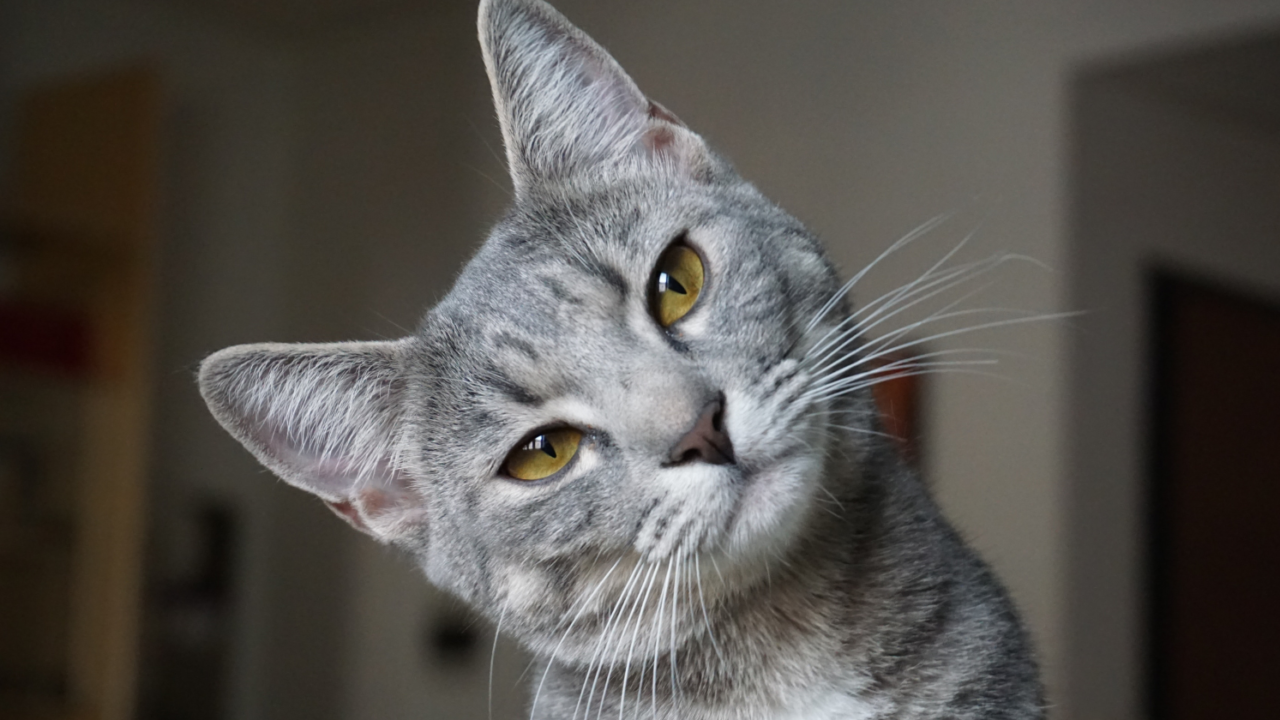
You call your cat’s name from the kitchen. On the sofa, one ear swivels toward you. The tail flicks once. Then the cat goes back to sleep.
Cat owners have long suspected that the silence isn’t confusion. Research from Japan suggests they’re right. Cats can pick out their own names from other words. They just don’t always see a reason to act on it.
The experiment
In a 2019 study published in Scientific Reports, behavioral scientist Atsuko Saito of Sophia University in Tokyo and her colleagues tested 78 cats. Most lived in ordinary homes, and some lived in a cat café, a type of coffee shop popular in Japan where many cats share a space with customers.
The researchers used a classic method called habituation. A person said four words in a row, ordinary nouns chosen to match the length and accent of the cat’s name. Then they said the cat’s actual name.
Animals, including people, tend to stop reacting to sounds that don’t seem to matter. The researchers expected many cats to react less and less to each meaningless word. If a cat then perked up when it heard its own name, that would suggest it could tell the difference.
Ear twitches and head turns
That’s what happened. Many cats showed less interest as the ordinary words went by. When they heard their names, they often reacted again with an ear twitch or head turn, and sometimes by moving their tails or meowing.
The researchers ran four experiments in total. In one, the cat’s name came after the names of other cats it lived with. Household cats still picked out their own names. In another, a stranger rather than the owner spoke the words. Cats still responded more to their own names.
That second result matters. It suggests cats aren’t just responding to a familiar voice. They seem to recognize the sound of the name itself.
Café cats were different
There was one exception. Cats in the cat café were much less able to tell their own names apart from the names of the other cats living there.
Saito suggested the reason is how the café works. Customers constantly call out different cats’ names, often while offering attention or treats. The café cats may have learned that any of those names could lead to something interesting, so their own name didn’t stand out.
How cats learn their names
What’s going on in the cat’s brain? Saito thinks cats learn their names through association. The name is often followed by something important, such as food, play or attention, or something less pleasant, like a trip to the vet.
This kind of learning relies on the brain’s reward system, which helps animals learn which sounds and events predict good or bad outcomes. Over time, the cat’s name becomes a meaningful signal, while other words fade into background noise.
That doesn’t mean a cat understands its name the way we do. Saito has said she doesn’t think cats know the meaning of names or that the sound refers to them as individuals. Instead, the name works more like a cue that something may be about to happen.
Why your cat doesn’t come running
So why do dogs come when called, while cats often just twitch an ear?
One reason is history. People have spent thousands of years breeding dogs to work closely with humans and follow instructions. Cats became domesticated largely on their own terms, living near people to hunt rodents, with little selective breeding for obedience.
Saito’s earlier research found something similar. In a 2013 study, cats recognized their owners’ voices, responding by moving their ears and heads, but they rarely got up and approached. The response was attention, not obedience.
Not every cat, and not the final word
The study had limits. It involved only one café, and some scientists questioned parts of the method, including the choice to analyze only cats that clearly lost interest in the ordinary words. Others wanted more trials before concluding cats generalize names across unfamiliar voices.
Later research has gone further, though. In 2022, a team including Saito reported that cats seem to learn the names of other cats in their household, and even of the people they live with, looking longer at a familiar face when it was paired with the wrong name.
None of this guarantees your cat will come when called. But the next time it flicks an ear at the sound of its name and stays put, you can be fairly confident it heard you.