By
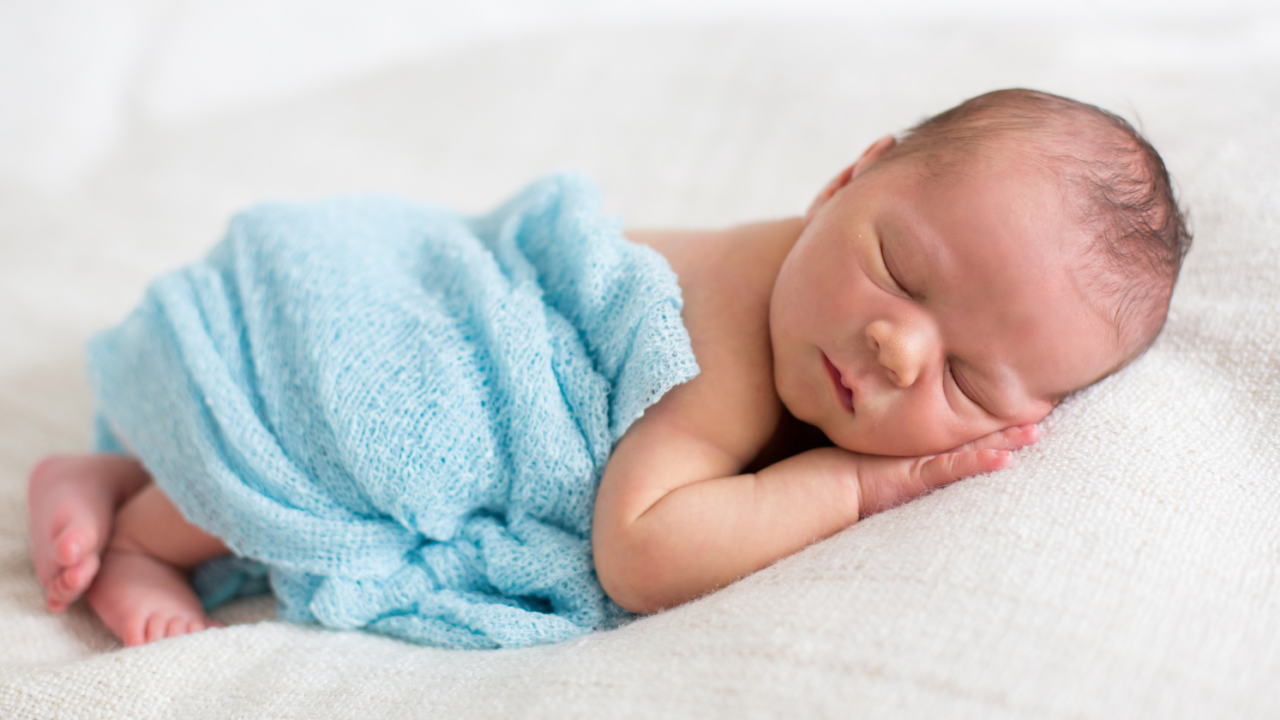
In a maternity ward in Paris, a baby only a day or two old lies asleep in a hospital bassinet. A soft cap of electrodes sits on her head. Through a small speaker, a recorded voice reads “Goldilocks and the Three Bears,” first in one language, then another.
She can’t understand a word. But her brain responds differently when the story switches to French, the language her mother spoke throughout her pregnancy.
Listening before birth
A baby’s ears start working well before birth. By the last few months of pregnancy, a fetus can hear sounds from the outside world, especially its mother’s voice, which travels through her body as well as through the air.
The womb acts like a muffler. It filters out many high-pitched sounds, so a fetus can’t make out individual consonants or words. But the rhythm and melody of speech, the rise and fall of the voice, come through clearly. By birth, a baby has spent weeks listening to the musical patterns of one language.
Babies, stories and brain waves
In a study published in Science Advances in 2023, researchers led by Benedetta Mariani and Judit Gervain at the University of Padua tested whether that prenatal listening leaves a mark on the brain.
They recorded brain activity using EEG in 49 newborns aged one to five days, all born to French-speaking mothers at Robert Debré Hospital in Paris. As the babies slept, they heard the Goldilocks story in French, Spanish and English, in a varied order. The recordings began and ended with periods of silence.
The researchers wanted to know what happened in the babies’ brains after each language finished playing. If the brain was learning, they expected the effects of the native language to linger.
The native language left a trace
That’s what they found. After the babies heard French, their brain activity stayed high and organized for several minutes, in a pattern that resembled the activity seen while they were listening. After Spanish or English, this lasting effect didn’t appear.
Spanish was a particularly useful comparison, because its rhythm is similar to French. Even so, only French produced the lasting change.
According to the University of Padua, the newborn brain seems to respond to the language it heard before birth with a kind of linguistic privilege. The researchers believe this response was shaped during pregnancy and helps lay the foundations for learning the native language.
A cry with an accent
Another study found that the influence shows up in babies’ own voices too. In 2009, a team led by Kathleen Wermke at the University of Würzburg in Germany recorded the cries of 60 healthy newborns, 30 born to French-speaking families and 30 to German-speaking families. The babies were three to five days old.
When the researchers analyzed the melody of the cries, they found a clear difference. French babies tended to cry with a rising pitch pattern, while German babies tended to cry with a falling one. Those patterns match the typical melodies of each language. French often rises toward the end of a phrase, while German more often falls.
Newborns can’t speak, but they seem to be imitating the musical shape of the language they heard in the womb. Their cries carry a kind of melodic accent.
Wired for language
Newborns aren’t blank slates. Brain imaging studies of young infants have found that speech already activates a network in the left side of the brain, including regions near those that later become Wernicke’s area and Broca’s area, two key parts of the adult language system.
The new research suggests experience is shaping this network even before birth. The Padua team found the strongest effects in brain-wave patterns linked to how the brain tracks the rhythm and melody of speech, exactly the features a fetus can hear through the womb.
Other research supports this. A 2013 study found that newborns only hours old already responded differently to vowel sounds from their native language than to vowels from a foreign one.
Not destiny
None of this means babies are locked into one language. Newborns can still learn any language they’re raised with, and adopted children and children of multilingual families learn new languages successfully.
Gervain has stressed that prenatal language experience supports later development, but doesn’t determine it. A baby who didn’t hear a particular language in the womb isn’t at a disadvantage.
What the research shows is that learning starts earlier than we once thought. By the time a baby takes her first breath, she has already spent months tuning in to the sound of the voices around her.