By
Forty-three per cent. That's roughly how much of what we do each day happens on autopilot, while our minds are somewhere else entirely.
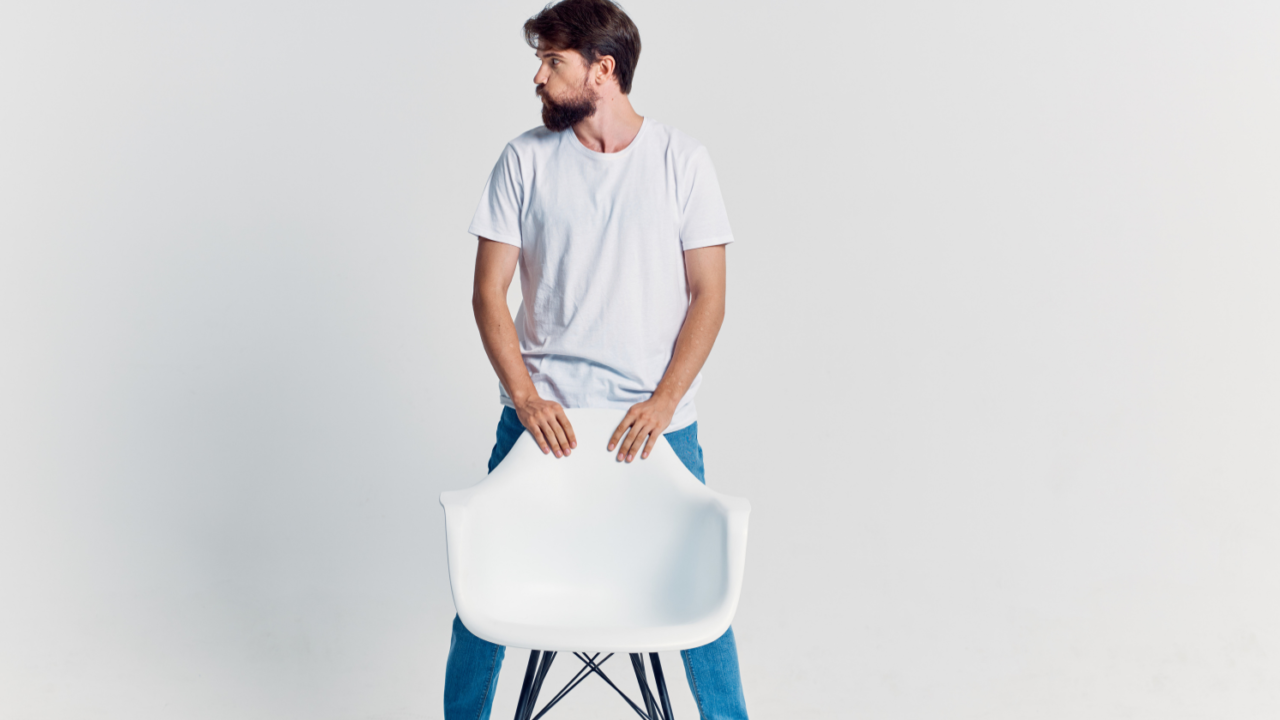
Pushing your chair in after a meal is a good example. Most people who do it couldn't tell you when they decided to. They stand up, their hands find the back of the chair, and it slides under the table while they're still finishing a sentence.
It's a tiny act, but it says something about how habits work and about how we learn to share space with other people.
A life on autopilot
The 43% figure comes from a 2002 study by psychologist Wendy Wood and her colleagues. They gave university students wristwatches that buzzed once an hour. Each time it buzzed, the students noted what they were doing and what they were thinking about.
Nearly half the time, people were doing something they did almost every day in the same place, while thinking about something else. Showering, making coffee, locking the door, scrolling a phone. The body was busy, and the mind had wandered off.
Interestingly, people also reported feeling less stressed during these habitual moments. Autopilot is efficient, and it's also quite restful.
How a habit gets built
Habits form through repetition in a consistent setting. Do something often enough in the same context, and your brain gradually links the two. Eventually the context alone triggers the action, with no decision required.
For chair-pushing, the cue is simple: standing up from a table. Do it enough times as a child, perhaps prompted by a parent, a teacher or a school dinner lady, and the movement attaches itself to the moment. Decades later, it still fires.
The same mechanism explains why some people always rinse their mug, close cupboard doors behind them or switch off lights in empty rooms. Nobody is thinking about it. They learned it so long ago that it simply runs.
Why shared spaces are different
Your own bedroom only affects you. A kitchen table, an office or a train carriage affects everyone who uses it next.
Psychologists have spent a lot of time studying how people behave in shared spaces, and one finding stands out. Behaviour in these spaces is contagious, in both directions.
In a well-known 2008 study published in Science, Dutch researchers in the city of Groningen secretly tucked flyers under the handlebars of bicycles parked in an alleyway. When the alley walls were clean, about a third of cyclists dropped the flyer on the ground. When the walls were covered in graffiti, the proportion who littered roughly doubled.
The researchers concluded that when people see signs that others have broken a norm, they're more likely to break norms themselves. Disorder spreads.
The quieter flip side
What's less well known is the follow-up.
In a 2013 study, the same team tested what happens when people see order being restored, not just order that already exists. They found this was when good behaviour was most likely to spread. Watching someone tidy up, pick up litter or put something back seemed to nudge others into doing the same.
That's where a pushed-in chair earns its place. On its own, it hardly changes the world. But it's a small visible sign that someone has thought about the next person, and research suggests those signs do quietly influence others.
It's worth adding that the original littering experiments haven't held up perfectly everywhere. One attempt to repeat them in the United States didn't find the same effect on rule-breaking, though it did find that messy surroundings made people less helpful. The broad picture holds, but the details depend on place and culture.
What the habit does and doesn't tell you
So does a pushed-in chair reveal someone's character? Not exactly.
A habit mostly tells you about someone's past: what was repeated, encouraged or expected when they were learning how to live alongside other people. Someone who grew up in a busy household, a strict school or a job in hospitality may do it without a second thought. Someone who never had it drilled into them might be every bit as considerate and simply not have the reflex.
What the habit does show is how much of our consideration for others is built in early and then runs quietly in the background. Most of the time, we're not choosing to be thoughtful about shared spaces. We're just doing what we learned.
Next time you leave a café, notice whether your hand reaches for the chair. If it does, someone taught you that a long time ago.