By
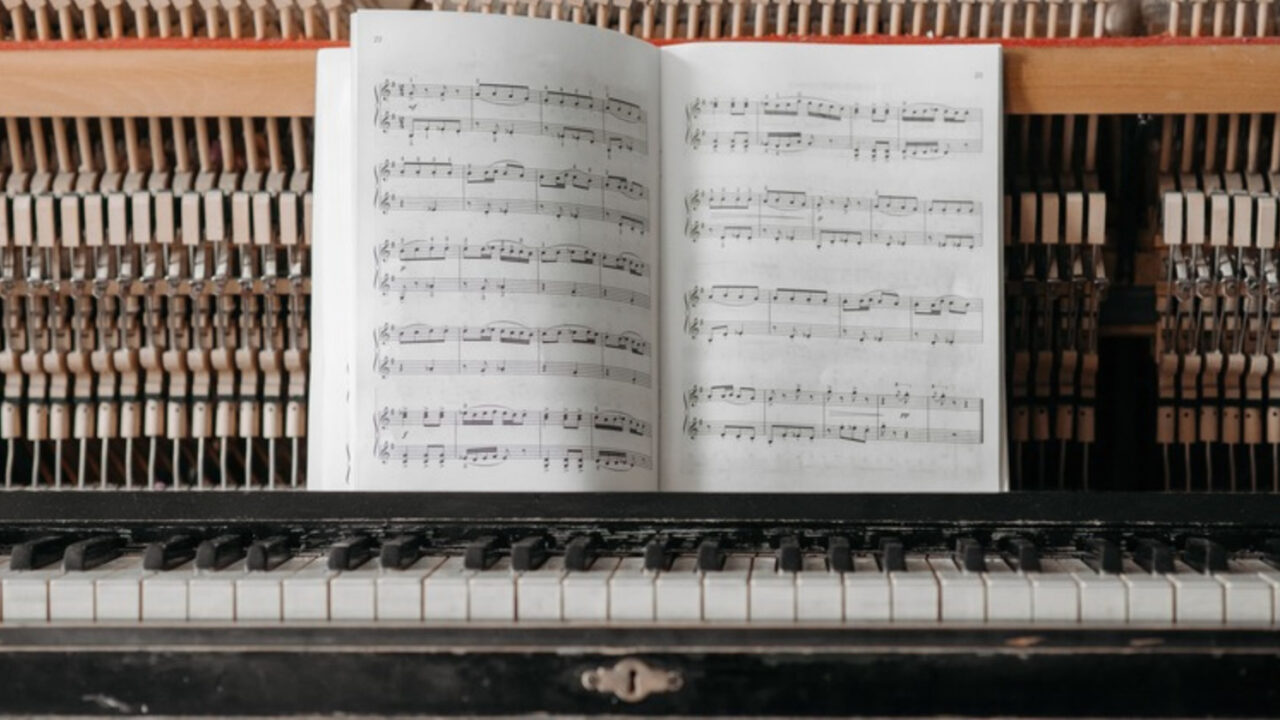
The paper in Nature ran to a single page. Thirty-six students at a California university listened to ten minutes of a Mozart piano sonata, then worked through a few spatial puzzles. When the researchers converted those scores onto an IQ scale, the Mozart session came out at 119. After silence, or a relaxation tape, the same students scored 110 or 111.
The lift lasted 10 to 15 minutes. It was a narrow test, not a measure of general intelligence. That did not stop the headlines.
How a one-page study became a craze
Newspapers treated the result as a jump in IQ. A New York Times report asked whether Mozart's music could improve intelligence. Other headlines announced that Mozart made you smarter, or that it made the brain hum. The phrase "Mozart effect" soon followed, and it stuck.
Books and CDs appeared, promising that the right music could sharpen the mind, including the minds of infants who had never been in the original experiment.
What the 1993 study actually did was more modest. Frances Rauscher, Gordon Shaw and Catherine Ky, then at the University of California, Irvine, played Mozart's Sonata for Two Pianos in D major, K.448, and compared that with sitting in silence or listening to relaxation instructions. After each session came a set of abstract spatial tasks from an intelligence test: folding paper in the mind's eye, spotting patterns, working through matrices.
The Mozart session scored higher. The researchers were clear that the effect was temporary, and they never measured general IQ, or anything in babies. The "smarter" framing came largely from the press.
Thirty-six people, each tested three times, is a small sample. A finding that brief and that specific was always a thin base for a theory of intelligence.
A CD for every newborn
In January 1998, Georgia's governor, Zell Miller, asked the state legislature for $105,000 to send every newborn home with a classical cassette or CD. A former teacher, he had read a magazine account of the Mozart result, and of a separate finding about keyboard lessons in young children. In his address he said no one questioned that listening to music very early in life affected the kind of thinking behind maths and engineering. He had not consulted the researchers.
The legislature was reluctant to spend the money, and critics said the benefit for babies had not been shown. Sony, which had a large plant in Georgia, offered to make the recordings free instead.
By June, hospitals were handing out a disc called Build Your Baby's Brain Through the Power of Music. It included Mozart's Eine Kleine Nachtmusik, plus pieces by Vivaldi, Schubert, Bach, Beethoven and Handel. It did not include the sonata from the study.
Rauscher later wrote that the scientific reports had made no claims about general intelligence, exam scores, or babies, and that there was no evidence casual listening to classical CDs improved children's reasoning, or any other aspect of intelligence.
About 100,000 babies are born in Georgia each year. Miller handed over the first tapes from his office in Atlanta that June. The discs went out all the same.
Was it Mozart, or just a better mood?
Doubt was already building in the laboratories. In 1999, in the same journal that had published the original paper, Christopher Chabris pooled the studies then available and found that any boost was tiny: about one or two IQ points, not eight or nine. It did not appear on tests of general reasoning, and even the small gain on spatial tasks was shaky.
A more mundane explanation followed. In 2001, William Thompson, Glenn Schellenberg and Gabriela Husain tested 24 students on a spatial task after they had listened to Mozart, after a slow, sad adagio by Albinoni, or after silence. Scores rose after Mozart, not after Albinoni. Once the researchers accounted for how enjoyable, alert and upbeat people felt, the Mozart advantage disappeared.
A lively piece you like can wake you up. So can a cup of coffee. That is not the same as music rearranging your intelligence.
What was left of the effect
A 2010 review of nearly 40 studies, involving more than 3,000 people, found only a small effect after Mozart compared with silence or no music — and a similar-sized effect after other music. The difference between Mozart and other music was negligible. Studies from the original research groups reported bigger effects than everyone else, and there were signs that positive results were more likely to be published.
The original claim was already modest: a brief lift on a particular kind of puzzle, in adults, after one sonata. The story that Mozart made people smarter, and that a CD could do the same for a newborn, was something the press and the politics built on top.
Miller's discs still went out to hospital wards across Georgia. There is no harm in playing Mozart to a baby. He just never had to make anyone cleverer for that to be true.