By
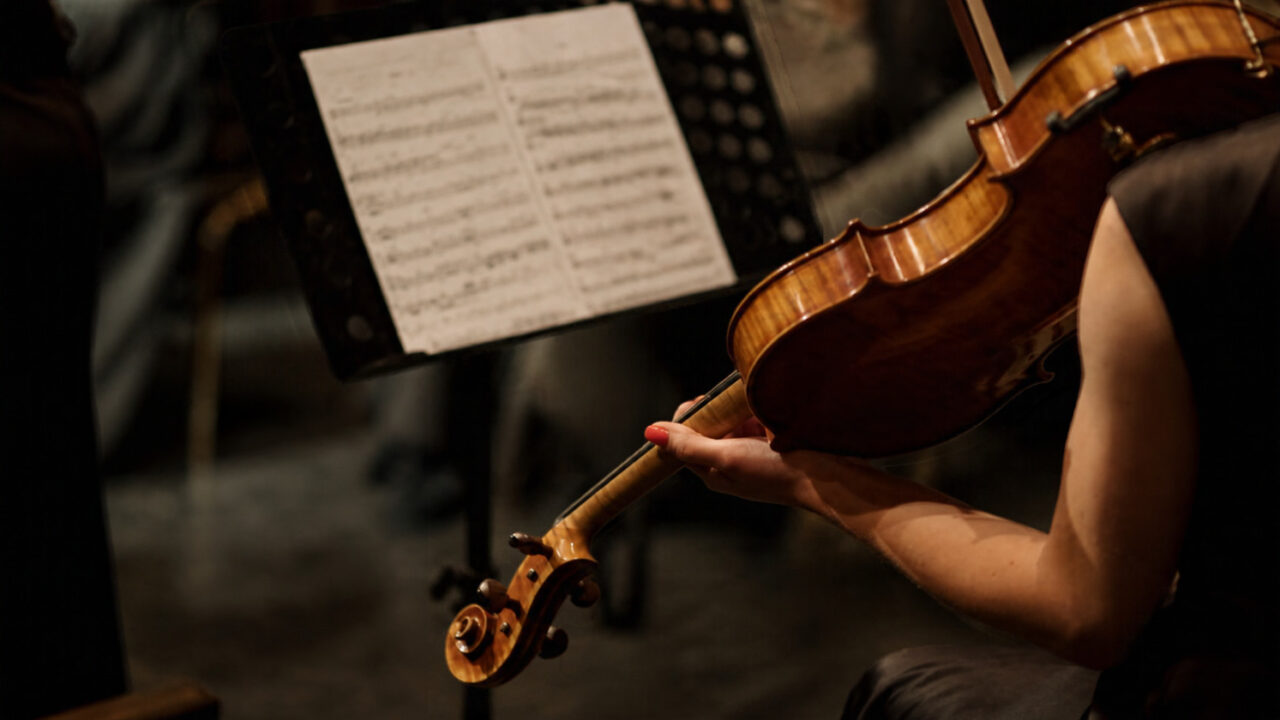
Once the bone of her skull was open, the anaesthetists brought Dagmar Turner round. She lifted her violin and began to play.
It was January 2020, in an operating theatre at King's College Hospital in London. Surgeons were about to remove a tumour from the right frontal lobe of her brain, close to the tissue that controls the fine movement of her left hand. That hand is what a violinist uses to set the pitch. If they strayed by a few millimetres, the instrument she had played since she was ten might never sound the same.
The playing was not a stunt. It was one part of a plan to show the surgical team, in real time, which parts of her brain they should not touch.
A seizure in mid-symphony
Turner, then 53, had been diagnosed in 2013, after a seizure during a symphony. The growth was a grade 2 glioma: slow-growing, but serious. She had a biopsy and radiotherapy, which held it for years. Then, in 2019, it began to grow and look more aggressive. She wanted it out.
She also wanted to keep playing. She performs with the Isle of Wight Symphony Orchestra, and she went to Professor Keyoumars Ashkan, a consultant neurosurgeon who holds a degree in music and is an accomplished pianist, in part because she thought he would understand what that meant.
Ashkan later recalled that she had told him, in clinic, that if she could not play she would rather die of the tumour than have it operated on. The team took that seriously.
What they needed to protect
The trouble with a glioma is that it does not sit in a neat capsule. It infiltrates the surrounding brain, often near the networks that move a hand, form a word, or, in a musician, make the tiny, rapid adjustments that keep a note in tune.
Surgeons have known for nearly a century that the safest way to find those networks is to ask the brain itself, while the patient is awake. In the 1930s, Wilder Penfield and Edwin Boldrey stimulated the exposed cortex of patients during surgery and recorded which spots moved a hand, a face or a foot. The method is still the backbone of modern brain mapping, though the tools are more precise.
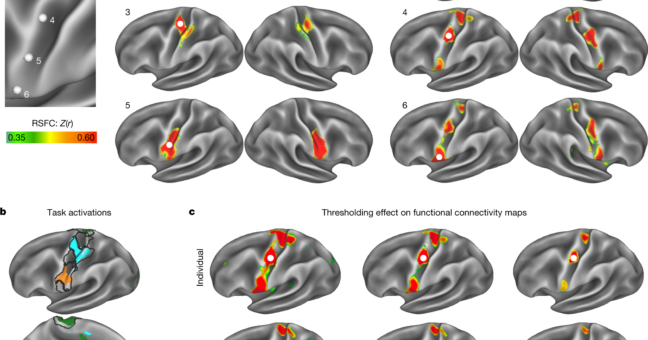
Before Turner's operation, Ashkan's team spent two hours mapping her brain, identifying the areas that became active when she played, and those that controlled language and movement. In theatre, neurophysiologists continued that mapping, including with stimulation, while physiotherapists watched her motor function. The plan was to wake her once the skull was open, so she could play as they operated.
The violin was a test used alongside that work, not a substitute for it.
Then they woke her
A craniotomy is the opening of the skull. Once that was done, Turner was brought out of the anaesthetic and given her instrument. She played as the tumour came out.
What the team was listening for was not a concert. It was a warning. If a passage faltered, if the left hand lagged or a finger missed its place, that was a sign they were too close to tissue she could not afford to lose. Stimulation of the cortex could also briefly interrupt a movement and mark a boundary.
They removed more than 90 per cent of the tumour, including all the areas that looked aggressive, and she kept full function in her left hand.
Does this kind of mapping work?
Awake surgery with stimulation is not just for musicians, and it is not new. The question is whether it actually helps patients keep the abilities that matter, while still letting the surgeon take out as much tumour as possible.
In 2012, a team led by Philip De Witt Hamer and Hugues Duffau reviewed 90 observational studies of more than 8,000 adults who had surgery for infiltrative gliomas, with or without intraoperative stimulation mapping. Late, severe neurological problems were less common when mapping was used, at 3.4 per cent against 8.2 per cent. Complete removal of the tumour on scans was also more common, at 75 per cent against 58 per cent.
That is a strong result, but it is not a randomised trial. The studies were observational, so some of the difference could reflect which patients, and which centres, used the technique in the first place. The authors still argued it should be standard practice.
Music itself is a narrower problem. A 2022 review of patients who played or sang during awake surgery found only 14 published cases, across ten studies. Mapping of musical function was possible in 13 of them. In the seven people whose musical ability was formally checked afterwards, none had lost it. That is encouraging, and far too small a sample to treat as proof. The tests were not even the same from case to case.
Turner's operation sits in that thin literature: a carefully planned combination of preoperative mapping, stimulation, and a task that mattered to her, rather than the violin working some magic on its own.
Home in three days
Three days later she went home to the Isle of Wight. Within three weeks she was back with her orchestra.
The story did not end there. In 2023 she told the BBC that fatigue had followed the operation and still affected her. Ashkan noted that when everything seems to work after brain tumour surgery, there can be a burst of euphoria, and that longer-term problems, including tiredness, are common. She was still playing.
The point of waking her was never to put on a performance. It was to watch the one skill she could not afford to lose, while there was still time to step back.