By
I was always the person who could tell smells apart. Before bed I had small rituals: I would smell my favourite things, particular books, drawers, even boxes of random stuff, and I knew exactly how each one smelled. It wasn't only that I liked smells. They gave me back what I felt the first time I met that particular thing, and they helped me go back and see what was happening then.
It was like a time machine. I had no idea it worked this way.
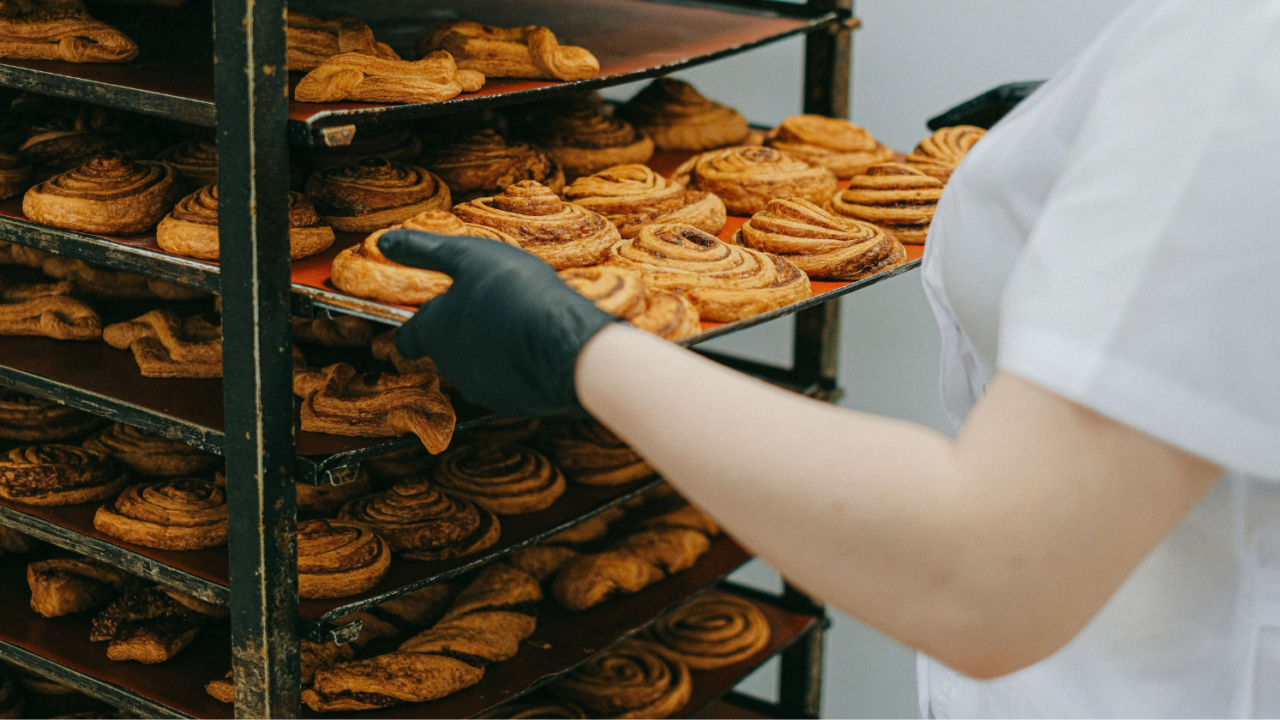
Stop for a minute and think of a smell from when you were small. Maybe it was the porridge someone made you eat before school. Maybe it was the cake your grandmother baked, or the warm sweetness of buns coming out of an oven.
Now notice where that smell puts you. Look past the smell itself and find the room, the light, who was standing there.
Chances are the scene arrived with a feeling attached, and chances are it arrived fast.
Researchers have run this little test on people, and what they found says a lot about how your nose is wired to your past.
The smell that takes you back before you were ten
In a 2006 study, Johan Willander and Maria Larsson gave 93 older adults a cue, either a word, a picture or a smell, and asked them to recall an event from their own lives. Their paper reports that when the cue was a smell, most of the memories came from the first ten years of life. When the cue was a word or a picture, the memories clustered in the second decade of life, between ages 11 and 20. Smell memories also carried a stronger feeling of being brought back in time, and people had thought about them less often than the ones brought up by words and pictures.
Notice what that means: these were older people, and a smell could reach past adolescence into early childhood. If your porridge or your grandmother's cake dropped you into a kitchen from when you were small, you just ran a small version of that experiment on yourself.
First, the feeling it points to deserves an explanation.
Why a photo nudges you but a smell puts you back there
I know how much a cue matters, because I have worked with them. Autobiographical memory, the memory of events from your own life, has been one of my research interests for years, and in my own research I used pictures as nudges to get people remembering.
Smell, it turns out, nudges differently.
Rachel Herz and Jonathan Schooler compared the two directly in a 2002 study. They asked 45 adults about memories tied to everyday items such as Crayola crayons and Vicks Vapor Rub, then had them meet the item again as either its smell or a picture. The memories triggered by the smell were rated as more emotional and as making people feel more "brought back" to the moment. On how vivid or specific the memories were, the two cues did not differ.
That is worth holding onto, because it corrects a popular line. A smell does not necessarily hand you a sharper, more detailed memory. What the study supports is that it hands you more of the feeling of being there.
"I love my nose."
Herz opens her TEDxNatick talk with that line, and it fits her career. She is a researcher on the psychology of smell, and her Brown University profile describes her work as looking at how smell-triggered memories differ emotionally from other memories, and at how emotional associations change the way we perceive a scent. That second part matters for you. What a smell means to you is shaped a great deal by what happened around it, which helps explain why the same scent can warm one person and leave another cold.
Rachel Herz, who studies the psychology of smell, in "Smell, Your Least Appreciated Sense" (TEDxNatick, 2019).
Your nose has a shortcut
So why does smell do this? The answer starts deep in the brain. When you see, hear or touch something, the signal first checks in at a relay station called the thalamus. Picture a busy switchboard: it takes incoming signals and passes them on to the part of the cortex that handles that sense. In their 2015 review, Emmanuelle Courtiol and Donald Wilson put it plainly: for every sense except smell, the thalamus is the main source of information reaching the primary cortex.
Smell skips that first switchboard. The receptors in your nose send their signals straight to the olfactory bulb, and from there the message goes to the brain's primary smell cortex. That region includes part of the amygdala, whose activity the review notes is influenced by how pleasant or unpleasant a smell is, and the entorhinal cortex. A 2021 study of the human brain in Progress in Neurobiology found that the primary smell cortex has stronger functional connections with the hippocampus, a region central to forming memories, than the primary cortex of other senses does.
In other words, a smell lands close to tissue involved in feelings and memories almost as soon as it arrives.
The relay it still uses, further along
Smell is not thalamus-free, and the review is careful about that. A region called the mediodorsal thalamus both receives from and sends to the smell areas. In the reviewers' own recordings in rats, about half the neurons there (51%) responded to odors. Yet people and animals with damage to this region can still detect smells, so whatever this loop adds, it is not the basic ability to detect them.
In short, smell skips the relay that comes before its primary cortex, and meets the thalamus later.
Donald Wilson, a research professor at NYU Grossman School of Medicine and a co-author of that review, shared his own working hypothesis about what the thalamus may add. Most of our smell experience, he explained, is subconscious: the olfactory system "keeps working in the background, monitoring our every inhalation for cues about what's going on in the world around us, giving us a sense of safety and home - or warning us something else is in the air." Awareness is where he thinks the thalamus may come in: "The thalamic-neocortical networks may be necessary for conscious perception of odors and our ability to say 'I smell it'." On his picture, the direct route works quietly in the background, and the thalamus helps us become aware of a smell. He pointed to a 2025 study in which recordings from electrodes in five people's brains showed parts of the thalamus acting as a gate on whether a stimulus reached awareness, though that study tested sight, not smell. It remains his hypothesis, and he was clear about that.
And there is one more caution. The studies above show the memory effect, and the anatomy shows the route. Neither one, on its own, shows that the route causes the effect. The wiring is a plausible explanation, and the sources I read stop short of demonstrating it.
When the time machine doesn't start
The childhood pull is less fixed than it first looks. In a 2007 study of 72 older adults, Willander and Larsson found that the childhood peak showed up when people got the smell alone. When the smell came with its name, the childhood advantage shrank, and the feeling of being brought back in time was weaker. Adding a word seemed to blunt the pull. And in Herz and Schooler's study the remembered events dated from around age 16 on average, not from early childhood.
Not every smell works, either. In a 2023 study, Lopis, Valentin and Manetta gave 130 young adults 64 different odors. Only a limited number of them spontaneously brought back a high-quality autobiographical memory, and fewer than a third of the memories reported (27 percent on average) were specific events.
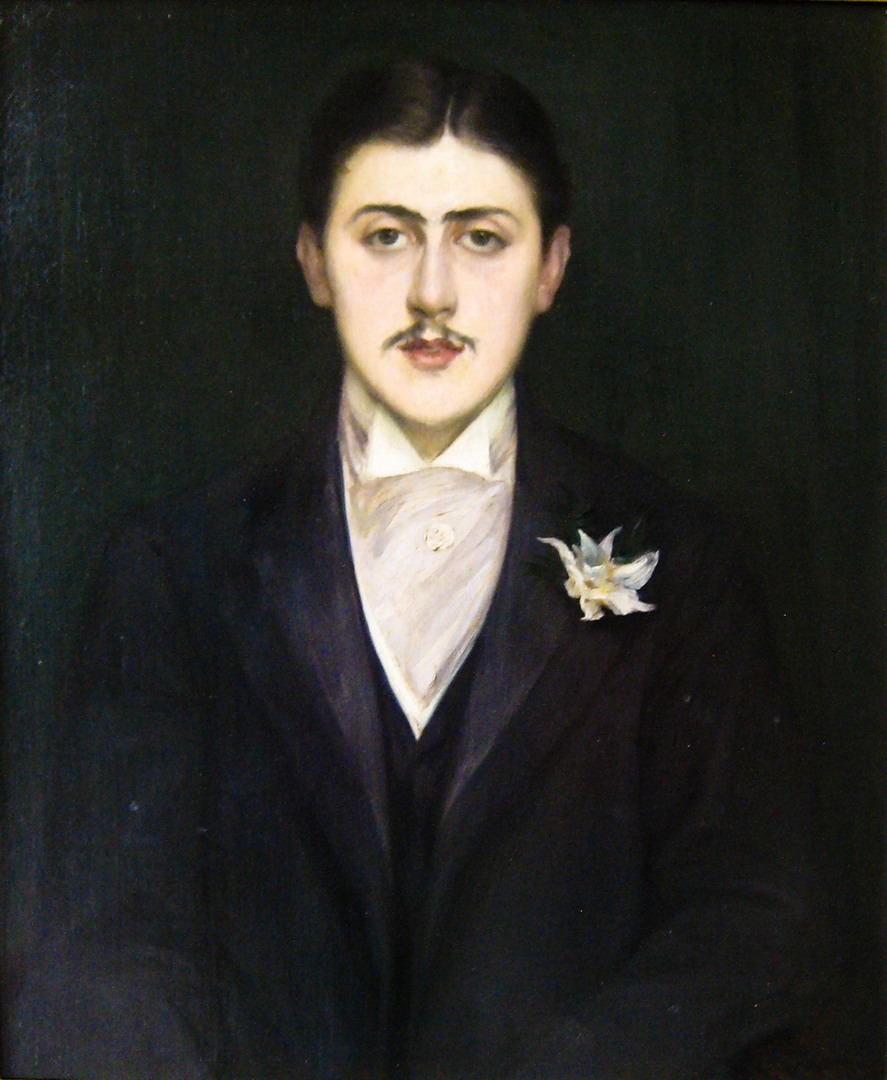
Researchers call the effect the Proust phenomenon, after the novelist Marcel Proust. In Swann's Way, the narrator tastes a madeleine dipped in tea and his childhood comes flooding back. Proust himself puts smell and taste together. In C. K. Scott-Moncrieff's translation, "the smell and taste of things remain poised a long time, like souls, ready to remind us". The scene is a mouthful of tea and cake, so even the most famous example is a blend of two senses.
So is your nose a time machine?
What you can take from all this: smell reaches the cortex without the relay the other senses use, and in these studies smell memories felt more emotional and more like being back there.
Still, keep a few things in mind. The idea that the thalamus is what makes us aware of a smell is Wilson's hypothesis. A smell won't hand you a sharper or more accurate memory, not every smell works, and the childhood pull doesn't hold for everyone.
For me, it changes how I see my old bedtime ritual. I spent years using pictures to nudge people's memories, and I am left wondering what would happen if I used smell instead.
Maybe I will try it.
Sources:
- Willander & Larsson, Smell your way back to childhood: Autobiographical odor memory, Psychonomic Bulletin & Review, 2006.
- Herz & Schooler, A naturalistic study of autobiographical memories evoked by olfactory and visual cues: testing the Proustian hypothesis, American Journal of Psychology, 2002.
- Courtiol & Wilson, The olfactory thalamus: unanswered questions about the role of the mediodorsal thalamic nucleus in olfaction, Frontiers in Neural Circuits, 2015.
- Lopis et al., Odor-evoked memories: The importance of choosing the right odor, Acta Psychologica, 2023.