 By
A Moscow newspaper editor in the mid 1920s handed out the day's assignments as long lists of addresses and instructions, and he noticed that one of his reporters never wrote any of it down.
He was about to reproach him.
The reporter repeated the whole assignment back word for word, and was sent off to a psychology laboratory to have his memory tested. The psychologist was Alexander Luria, later one of the founders of neuropsychology.
Of those test sessions Luria wrote that he "simply had to admit that the capacity of his memory had no distinct limits".
That verdict comes from Luria's 1968 book The Mind of a Mnemonist: A Little Book about a Vast Memory, where the reporter appears only as "S." In the book Luria describes what followed as a relationship of almost thirty years, filled with experiments, discussions and correspondence.
The reporter's name was Solomon Shereshevsky. Most of what is known about his life outside the laboratory comes from a 2013 paper in the journal Cortex by Luciano Mecacci, a former professor of general psychology at the University of Florence.
Mecacci, now an independent scholar, worked in Moscow in the 1970s while Luria was alive and saw the manuscript of the book. He has since corrected part of his own paper, including the year Shereshevsky was born.
How he lived away from the laboratory, and what his memory was like in his last years, is barely documented.
The tests used lists of words, strings of numbers, tables of figures and nonsense syllables, at any length the laboratory cared to produce. Making a series longer did not make it noticeably harder for him, Luria wrote.
Some retests were sprung on him with no warning, in Luria's words "fifteen or sixteen years after the session in which he had originally recalled the words", and he still produced the material. He was once read the opening lines of Dante's Divine Comedy in Italian, a language he did not speak. Fifteen years later, unwarned, he reproduced them with the stress and pronunciation intact.
Part of the explanation was built into how Shereshevsky experienced the world. He had synesthesia, which means input in one sense automatically produces an experience in another. For him every sound arrived with light and colour attached, according to the book, and often taste and touch as well.
He told the psychologist Lev Vygotsky, "What a crumbly, yellow voice you have." A fence he looked at came with a salty taste, along with a rough feel and a piercing sound.
The second part was a technique. To hold a series, Shereshevsky turned each item into an image and placed the images one by one along a street he knew well in his mind.
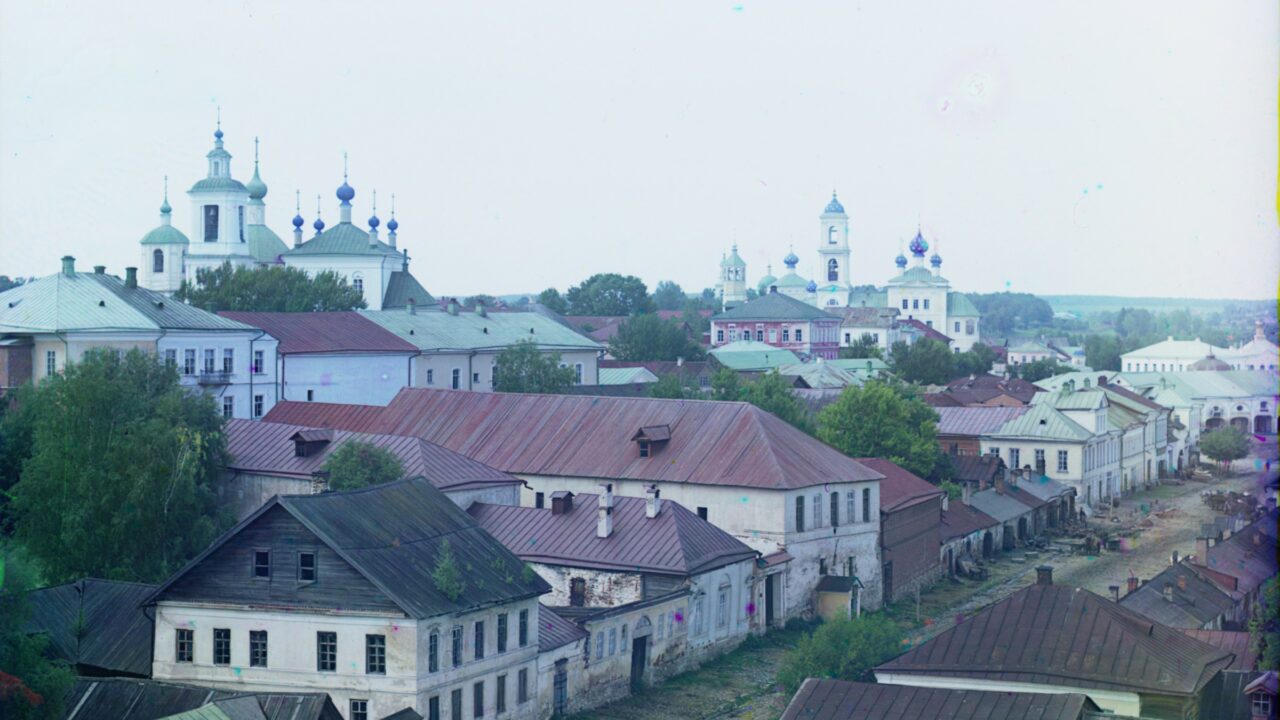
It was often Gorky Street in Moscow starting at Mayakovsky Square, or a street in Torzhok, the town where he grew up. To recall the list he took a mental walk back along the route, Luria wrote, and read the images off as he passed them.
This is the method of loci, also called a memory palace, an old technique used by Greek and Roman orators and still used by competitive memorizers.
Craig Stark, a professor of neurobiology and behavior at the University of California, Irvine, reads the case the same way. "'S' always seemed to me, much more in line with the Memory Champions. He used mnemonics pretty clearly and was exceptional in their use," he said in an email.
Like people learning a deck of cards who recode the cards into objects, Stark said, "he'd do this with numbers and could apply this in a wide range of domains."
Boris Nikolai Konrad, a memory athlete and researcher of superior memory at the Donders Institute and Radboud University Medical Center in the Netherlands, never met Shereshevsky and is working from Luria's account. He reaches the same conclusion.
"The description of S mental journey is not just similar to people using the method of loci, it basically is exactly that," he said in an email. Drawing on more than 20 years as a memory athlete and researcher of superior memory, Konrad believes the account indicates that where memory was concerned Shereshevsky worked much more like present day memory athletes, or the ancient users of techniques such as the method of loci, than Luria realized.
"Alexander Luria documented those strategies remarkably well," he said, but may not have fully appreciated how much they contributed to Shereshevsky's unusual cognitive characteristics.
The contrast Stark draws is with HSAM, or highly superior autobiographical memory: people who recall the events of their own lives in extraordinary detail. Stark studies them. "HSAM individuals, by contrast, are exceptional only in their autobiographical memory. Give them a list of digits, random words, etc. to hold onto and they do no better than the rest of us," he said in an email.
A 2016 study in Frontiers in Psychology by LePort, Stark, McGaugh and Stark compared people with HSAM against other participants. Recall of events from one week earlier was about the same in both groups, the study found. At one month, one year and ten years, the HSAM group recalled more. In Stark's phrasing they are "holding onto autobiographical information for far, far longer".
Shereshevsky's talent ran the other way, on arbitrary material handed to him cold.
Konrad does not think the technique accounts for everything, though. Other factors probably played a part as well, he said in the same email, "such as potential synesthesia and maybe somewhat compulsive repetition of content (such as known from people with HSAM, highly superior autobiographical memory)". These, he said, likely contributed "in particular to the very long-term retrieval he described in S. that is not common for modern day memory athletes".
A 2017 study in Neuron led by Martin Dresler looked at 23 memory athletes from the top 50 of the memory sports world rankings, all of whom credit their skills to deliberate training in mnemonic strategies. In a scanner task, 17 of them recalled an average of 70.8 out of 72 words twenty minutes after learning them, against 39.9 for matched controls.
The researchers then split 51 men with no mnemonic experience, average age around 24, into three groups: six weeks of method of loci training at 30 minutes a day for 40 days, working memory training, or no training.
The loci group improved significantly more than either of the other two, the paper reports, and the gain was still there at a four month follow-up. Their functional connectivity, meaning how closely the activity of different brain regions rises and falls together, shifted toward the pattern seen in the athletes.
The paper's introduction notes that this kind of memory skill does not seem to come with extraordinary brain anatomy or general cognitive superiority.
This is what I think makes the case worth going back to. Shereshevsky had an incredible talent and a genuinely different one, and the techniques he used are available to other people too, which takes some of the aura off him. The story is still worth telling truly and in full.
He was poor at faces, saying they were "so changeable". Reading was hard because images crowded in on him, and abstract ideas gave him trouble, especially ones he could not picture, like "nothing" or "infinity".
He tried to get rid of unwanted material by writing it on slips of paper and burning them, which did not work. He also left things out. When Luria tested whether lapses happened at all, he reported that "not only were such instances to be found, but they were fairly frequent".
They tended to come when he had set an image somewhere badly lit or against a background it blended into, so that on his mental walk he went past it without noticing. Luria read those as failures of perception rather than of memory.
Mecacci now dates Shereshevsky's birth to 1 March 1892 in Rezhitsa, today Rēzekne in Latvia, in line with archive records. He said in an email that the two dates in circulation, 1886 in most English sources and 1896 in his own 2013 paper, "need to be corrected".
The family later moved to Torzhok, north of Moscow, where his father ran a bookshop, according to Mecacci's paper. He studied music and might have become a violinist, until an ear disease damaged his hearing.
Even the first meeting with Luria is unsettled. Mecacci's paper puts it in July 1926 at the Institute of Psychology in Moscow.
A notebook Shereshevsky wrote near the end of his life, obtained from Luria's archives by Reed Johnson, who described it in The New Yorker in 2017, gives 13 April 1929 and his age as 37, which fits an 1892 birth.
There is also an entry in Open List, a database of victims of Soviet political repression, citing a case file in the State Archive of the Russian Federation.
It lists a Solomon Veniaminovich Shereshevsky, born 1 March 1892 in Rezhitsa, a stage performer living in Moscow, arrested by the NKVD on 30 April 1938 on a charge of anti-Soviet agitation. The case was dropped on 20 April 1939. The file itself has not been seen here, and the record has not been independently confirmed.
Mecacci said in an email that the political climate in Moscow during the 1930s and 1940s took Luria and Shereshevsky down different paths, and that this is why "we know very little about Shereshevsky's memory abilities in the last years of his life".
Johnson's reporting adds the account of Shereshevsky's nephew, Mikhail Reynberg, who told him that his uncle could be forgetful, that he trained hours a day for his evening performances, and that he was pressured to work for the secret police but declined.
Mecacci's paper gives his death as Moscow, 1958. Johnson writes that he died that year from complications related to his alcoholism, with the drinking in his final years resting on what his nephew said.
This is one man, studied mainly by one researcher who put the book together decades later from what his own preface calls old, yellowed notes.
The date of their first meeting does not agree across sources, and the arrest record is a database entry that has not been checked against the file it cites. The nephew is a single family source.
Mecacci said in an email: "In my opinion, the most reliable information is that found in Luria's book." The surviving manuscript material sits in Luria's archive outside Moscow with his heirs, and it is "not easily accessible", he said in the same email.
I think the honest position is that we have a well documented stretch of one man's memory in the 1920s and 1930s and a thin sketch of the rest of his life, and the unpublished papers in that archive are the obvious place to look for the rest.
Mecacci's 2013 paper says the file on S. is preserved in that archive, and he hoped it would be studied.
Sources
- A. R. Luria, The Mind of a Mnemonist: A Little Book about a Vast Memory, 1968 (Harvard University Press edition 1987).
- L. Mecacci, Solomon V. Shereshevsky: The great Russian mnemonist, Cortex, 2013.
- R. Johnson, The Mystery of S., the Man with an Impossible Memory, The New Yorker, 2017.
- A. K. R. LePort and colleagues, Highly Superior Autobiographical Memory: Quality and Quantity of Retention Over Time, Frontiers in Psychology, 2016.
- M. Dresler and colleagues, Mnemonic Training Reshapes Brain Networks to Support Superior Memory, Neuron, 2017.
- Open List, Shereshevsky Solomon Veniaminovich (1892), database record citing the State Archive of the Russian Federation (in Russian).
- Emails from Luciano Mecacci, Craig Stark and Boris Nikolai Konrad, October 2026.